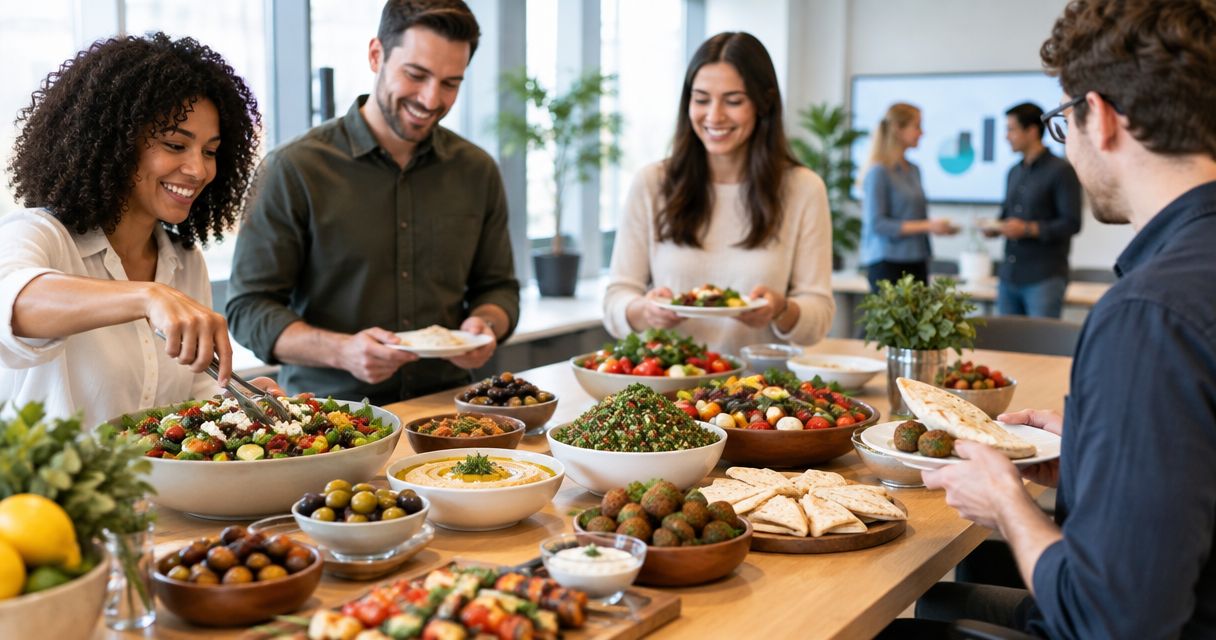
Best for a quick office handoff: ready-to-serve boxed lunches. Best for shared serving: sandwich platters. Best for a scheduled team meal: buffet trays. This 2026 guide compares corporate catering by the work between delivery and eating—not unsupported promises about which provider drives fastest.
- Corporate catering ranked by delivery speed needs a confirmed arrival time, not an assumed fastest provider.
- Ready-to-serve boxed lunches rank first for individual distribution; packaging does not prove faster delivery.
- LoveCater connects businesses with local restaurants for corporate catering, group orders, and real-time delivery tracking.
- Choose the confirmed arrival window first, then compare handoff, setup, and distribution requirements.
Why delivery speed needs a better definition
LoveCater is best for businesses seeking local-restaurant corporate catering with group orders and real-time delivery tracking. You can use LoveCater to order catering and food from local restaurants. Tracking gives your organizer visibility; it is not a delivery-time guarantee.
For an office meal, speed has several parts: restaurant preparation, travel, building access, setup, and distribution. A delivery at reception is not the same as lunch ready in your meeting room.
No measured restaurant delivery times support a provider-by-provider speed ranking here. Instead, this guide ranks five catering formats by their handoff and serving requirements. A confirmed arrival window outranks the format ranking whenever your deadline is fixed.
What makes the best corporate catering for speed
Use these criteria for your 2026 shortlist before choosing a menu:
- Confirmed arrival: The restaurant accepts the date, destination, order requirements, and requested arrival window.
- Order readiness: Your headcount, selections, dietary requests, and delivery instructions are settled before submission.
- Building access: The driver has usable entrance instructions and a named recipient who can answer.
- Setup burden: You know whether the order arrives ready to distribute or needs arranging and serving equipment.
- Distribution effort: You know how people will identify meals, serve themselves, or collect individual selections.
- Delivery visibility: The organizer can follow progress and communicate changes to the receiving team.
Do not treat tracking as a substitute for confirmation. Visibility helps you manage an order already in motion; it does not establish how quickly a restaurant can prepare it.
Corporate catering ranked by delivery speed: at a glance
This is a ranking of office handoff and serving simplicity, not measured road speed. The order assumes that each restaurant has already accepted your delivery requirements; actual preparation and travel times remain order-specific.
| Rank and option | Best for | Standout feature | Key limitation |
|---|---|---|---|
| 1. Ready-to-serve boxed lunches | Individual distribution | Separate meals can go directly to recipients | Meal identification matters when selections differ |
| 2. Sandwich platters | Shared cold lunch | A shared format without hot-food setup | Guests still need to serve themselves |
| 3. Buffet trays | A scheduled shared meal | Food is organized around a common serving area | Setup and serving are separate from delivery |
| 4. Individual group orders | Different personal preferences | Each participant makes an individual selection | Collection and meal matching need coordination |
| 5. Staffed catering | Events requiring on-site service | Service is part of the event plan | Arrival must allow for the agreed setup |
Group ordering is an ordering method rather than a packaging format. It appears separately because collecting selections creates a different planning task, even when the resulting meals arrive individually packaged.
1. Ready-to-serve boxed lunches: best for individual distribution
A ready-to-serve boxed lunch keeps an individual meal together. When meals arrive complete and identifiable, your receiving team can hand them out without portioning shared trays.
Best for: Meetings where attendees need to collect a meal and sit down. Confirm what each box contains rather than assuming utensils, condiments, or dietary labels are included.
Ready-to-serve boxed lunch pros:
- Individual meals do not require shared portioning.
- Distribution can follow a recipient list when meals are labeled.
- Each attendee can carry a complete meal to a separate seat.
Ready-to-serve boxed lunch cons:
- Different selections require accurate identification.
- Packaging creates a collection and disposal task.
- A missing individual meal requires a separate resolution.
The format earns first place for the limited work after handoff, not because a restaurant necessarily prepares boxes faster than platters. A large order still needs an accepted preparation and delivery plan.
Ask whether the meals arrive ready to distribute and how special requests are distinguished. If your organizer must open packages to work out who gets what, the main advantage disappears.
Verdict: Buy for individual distribution once the restaurant confirms your deadline and meal identification.
2. Sandwich platters: best for a shared cold lunch
Sandwich platters put a shared meal in a central serving area. A cold menu avoids the need to arrange hot-food holding equipment, though serving space and food-safe handling still matter.
Best for: Informal meetings where guests can choose from a shared spread. This format fits a table-based lunch better than meals handed out at the door.
Sandwich platter pros:
- A cold menu does not require hot-food setup.
- Shared platters let guests choose at the serving table.
- The receiving team can arrange the meal in one location.
Sandwich platter cons:
- Guests must serve themselves rather than collect a complete meal.
- Shared presentation requires care around dietary restrictions.
- The organizer needs to confirm portions and serving supplies.
Ask the restaurant to describe portions clearly. A platter count alone does not tell you whether the order matches the number of people eating.
Keep dietary-specific food separately identifiable, and ask the restaurant about preparation and cross-contact concerns. A label helps guests identify food; it does not establish that the food meets an allergy requirement.
Verdict: Buy for a shared cold lunch when portions, dietary handling, and serving supplies are confirmed.
3. Buffet trays: best for a scheduled team meal
Buffet trays serve a group through a shared food station. The delivery can reach your building before the meal is ready to eat because trays still need placement, serving utensils, and any required holding arrangements.
Best for: A planned lunch with a designated serving area and an organizer responsible for setup. Treat food arrival and buffet readiness as separate milestones.
Buffet tray pros:
- Shared trays support a common meal service.
- Guests can choose among the dishes provided.
- The organizer can arrange food around a designated serving area.
Buffet tray cons:
- Unloading and arranging trays adds work after delivery.
- Shared serving creates a queue when guests arrive together.
- Hot or cold holding requirements need advance coordination.
Before ordering, identify who supplies serving utensils and any necessary equipment. Do not assume that a food delivery includes buffet setup or staffed service.
For a fixed meeting break, ask when the buffet must be ready—not just when the vehicle should arrive. The restaurant needs the actual service requirement to confirm whether the order fits.
Verdict: Hold until setup responsibility, equipment, and the meal-ready deadline are agreed.
4. Individual group orders: best for personal preferences
Individual group orders let participants submit their own selections within a coordinated order. LoveCater offers group orders alongside corporate catering and real-time delivery tracking.
Best for: Teams that need individual choices rather than a shared menu. The ordering method addresses preference collection; it does not by itself establish faster preparation or delivery.
Individual group order pros:
- Participants can specify their own selections.
- The organizer does not have to choose every person's meal.
- Individual selections provide a basis for matching meals to recipients.
Individual group order cons:
- Late selections delay finalizing the order.
- Different meals require an organized distribution process.
- Individual requests still need restaurant confirmation.
Set an internal response deadline before the restaurant's confirmed ordering cutoff. Make clear who follows up on missing selections and who submits the completed order.
Also confirm how the delivery will be organized. Group ordering describes how choices are collected, not whether every meal has a name label or how the restaurant packages the food.
Verdict: Buy for individual choice; skip it when you cannot collect selections before the confirmed cutoff.
5. Staffed catering: best for events requiring on-site service
Staffed catering includes an on-site service component rather than food drop-off alone. Its schedule must account for the agreed setup and service work, so delivery speed is the wrong primary selection criterion.
Best for: Events where the organizer needs people to manage food service. Define the service scope before comparing arrival times.
Staffed catering pros:
- On-site service responsibilities can be assigned in advance.
- Setup can form part of the agreed event plan.
- Guests receive the service format specified for the event.
Staffed catering cons:
- Arrival and guest service are separate milestones.
- Venue access must accommodate setup requirements.
- Responsibilities depend on the agreed scope, not the word catering.
Ask who handles unloading, placement, service, and clearing. A staffed booking should identify those responsibilities instead of leaving the office team to discover gaps during the event.
Verdict: Skip for a simple drop-off lunch; buy when on-site service is part of the brief.
How this ranking works
The 2026 ranking prioritizes tasks remaining after delivery: individual distribution, shared serving, setup, selection coordination, and on-site service. It does not score restaurants on unverified preparation times or claim that a particular platform is the fastest.
That distinction changes the buying decision. A confirmed buffet delivery that meets your service deadline beats an unconfirmed boxed-lunch order, regardless of the table position.
Choose confirmed timing first; use format simplicity as the tie-breaker. Keep the ranking subordinate to the restaurant's actual commitment and your building's receiving requirements.
Build the order around the meal-ready deadline
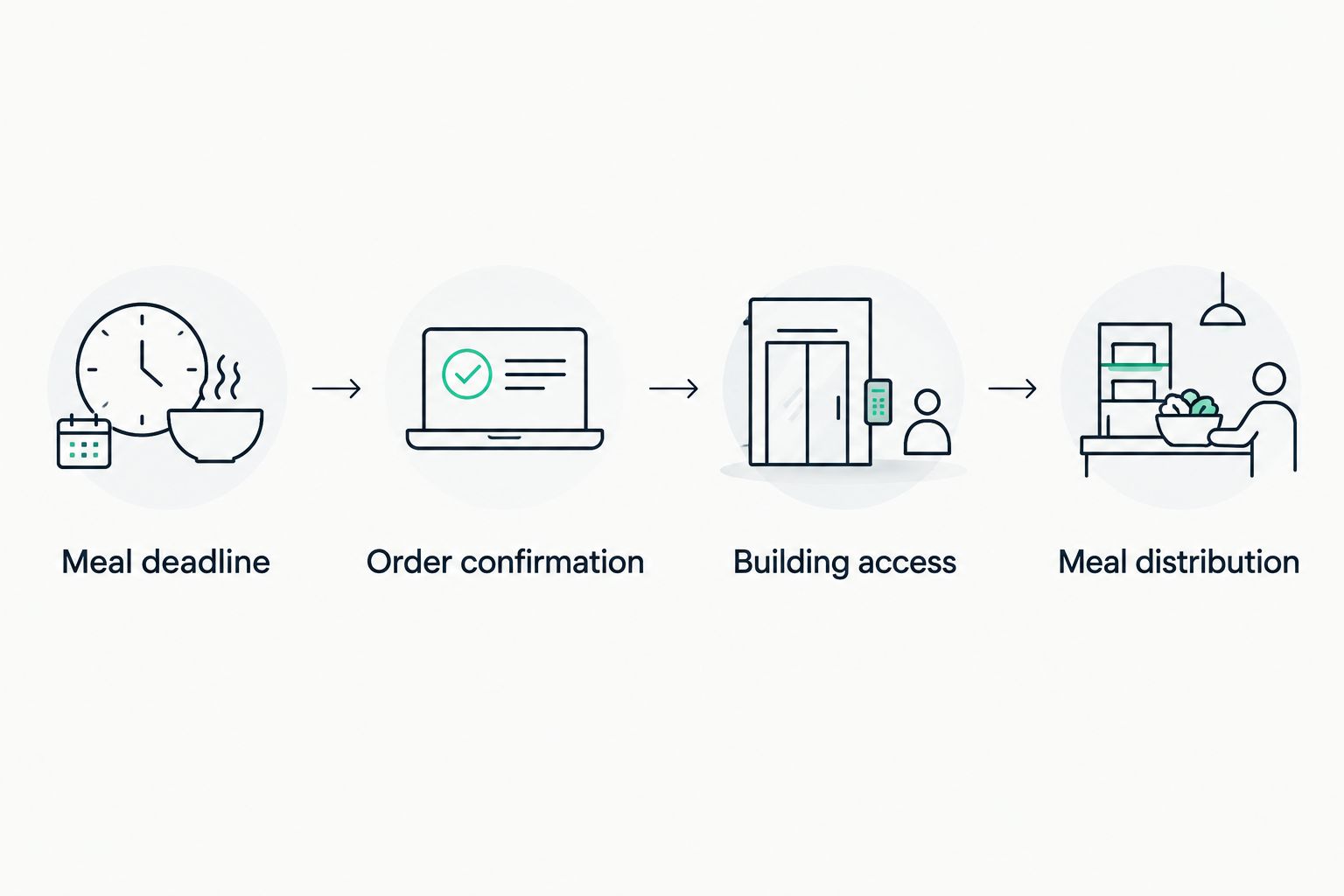
For your next 2026 booking, work backward from when people need to eat. Use this sequence to make the request clear.
Meal deadline
State the meal-ready time and distinguish it from arrival. For example, a 12:00 p.m. delivery for a 12:30 p.m. lunch leaves 30 minutes for receiving and setup; that is planning arithmetic, not a recommended buffer or a delivery promise.
Order confirmation
Confirm the headcount, menu, dietary requests, and accepted delivery window. For example, 12 attendees receiving one boxed meal each need 12 individual meals; verify the actual serving basis for shared food separately.
Building access
Give the entrance, floor, reception procedure, and recipient contact. Ask your workplace about delivery restrictions before submitting instructions to the restaurant.
Meal distribution
Assign someone to receive the order and check it against the confirmation. Decide where food goes and how guests identify their meals before the delivery reaches reception.
Keep the confirmed order details accessible to the person receiving the food. If the purchaser and recipient are different people, pass along the selections and delivery instructions rather than relying on memory.
Which corporate catering option should you choose?
Choose ready-to-serve boxed lunches as the default for straightforward individual distribution. Choose sandwich platters for shared cold serving, buffet trays for a planned food station, group orders for personal selections, and staffed catering for an event with service requirements.
Use LoveCater for corporate catering when you want to order from local restaurants with group orders and real-time delivery tracking. Confirm the restaurant's timing and order requirements rather than interpreting those platform features as a speed guarantee.
Plan your next office meal
Order from local restaurants with group orders and real-time delivery tracking.
FAQ
What's the fastest corporate catering option for an office lunch?
There is no verified fastest provider in this comparison. Ready-to-serve boxed lunches rank first for individual distribution, but the restaurant must confirm preparation and delivery timing.
Does real-time delivery tracking guarantee an on-time meal?
No, real-time tracking is not an on-time guarantee. LoveCater offers real-time delivery tracking, but you still need a confirmed arrival window and a plan for receiving the food.
Are boxed lunches faster than buffet catering?
Boxed lunches require less shared serving work when they arrive complete and identifiable. That does not prove faster restaurant preparation or travel than a buffet order.
Can I order corporate catering for delivery today?
Same-day fulfillment requires confirmation from the restaurant for your specific order. Provide the headcount, destination, menu requirements, and meal-ready deadline before relying on a delivery time.
How early should corporate catering arrive before a meeting?
Set arrival early enough to complete the setup your order actually requires. Confirm that requirement with the restaurant and receiving team rather than applying one buffer to every format.
Are group orders better than shared platters?
Group orders suit individual selections; shared platters suit communal serving. Choose according to how you want people to select and collect food, then confirm the delivery arrangements.
What should I check before booking corporate catering in 2026?
Check the accepted delivery window, serving basis, dietary requirements, building access, and setup responsibility. Name the recipient and distinguish arrival time from the time food must be ready to eat.
One last thing
Your best 2026 delivery instruction can be a simple distinction: food at reception is not food ready for the meeting. Put both deadlines in your request, and name the person responsible for the work between them.