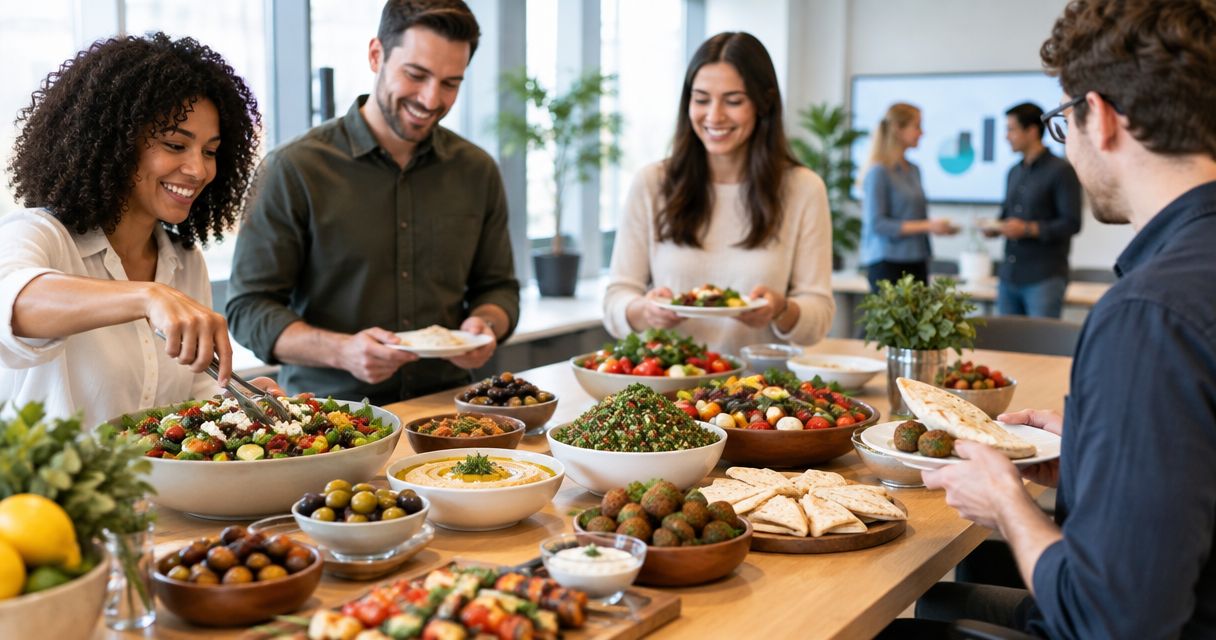
Best overall: build-your-own Mediterranean bowls. Best for working meetings: individually boxed lunches. Best for shared team lunches: mezze platters. This 2026 guide compares the best Mediterranean catering for office lunches by serving format, dietary checks, and setup needs—not by restaurant name alone.
- Build-your-own bowls are the best Mediterranean catering for office lunches when your team wants different combinations.
- Choose boxed lunches for business meetings and wraps for staggered lunch breaks.
- LoveCater connects businesses with local restaurants for corporate catering, group orders, and real-time delivery tracking.
- Confirm ingredients, serving equipment, and delivery instructions before choosing your office lunch catering.
Why this matters
An office lunch needs to fit the meeting as well as the menu. A shared spread interrupts a presentation if everyone must leave their seat; individual boxes remove that serving step but require accurate meal assignments.
LoveCater is an online catering platform for businesses ordering corporate lunches from local restaurants. You can use LoveCater for corporate catering and group orders with real-time delivery tracking. Choose the serving format first, then assess the restaurant menu against your team's requirements.
For your 2026 lunch plan, separate food preferences from food safety requirements. Someone disliking olives calls for a different response than someone reporting a sesame allergy. Record both clearly, but ask the restaurant directly about allergens and preparation practices.
What makes the best Mediterranean office catering?
Judge each option against these criteria before comparing dishes:
- Meeting fit: Can people collect and eat lunch without disrupting the agenda?
- Meal flexibility: Can diners choose components, or must they commit to a complete meal beforehand?
- Dietary clarity: Are ingredients and allergens confirmed for each component, including sauces and garnishes?
- Serving workload: Who supplies utensils, arranges food, manages collection, and clears the space?
- Delivery coordination: Does the order include the correct entrance, recipient, access instructions, and serving deadline?
These criteria favor different formats for different situations. A buffet wins on choice, not on desk-side convenience. A boxed meal wins on distribution, not on last-minute customization.
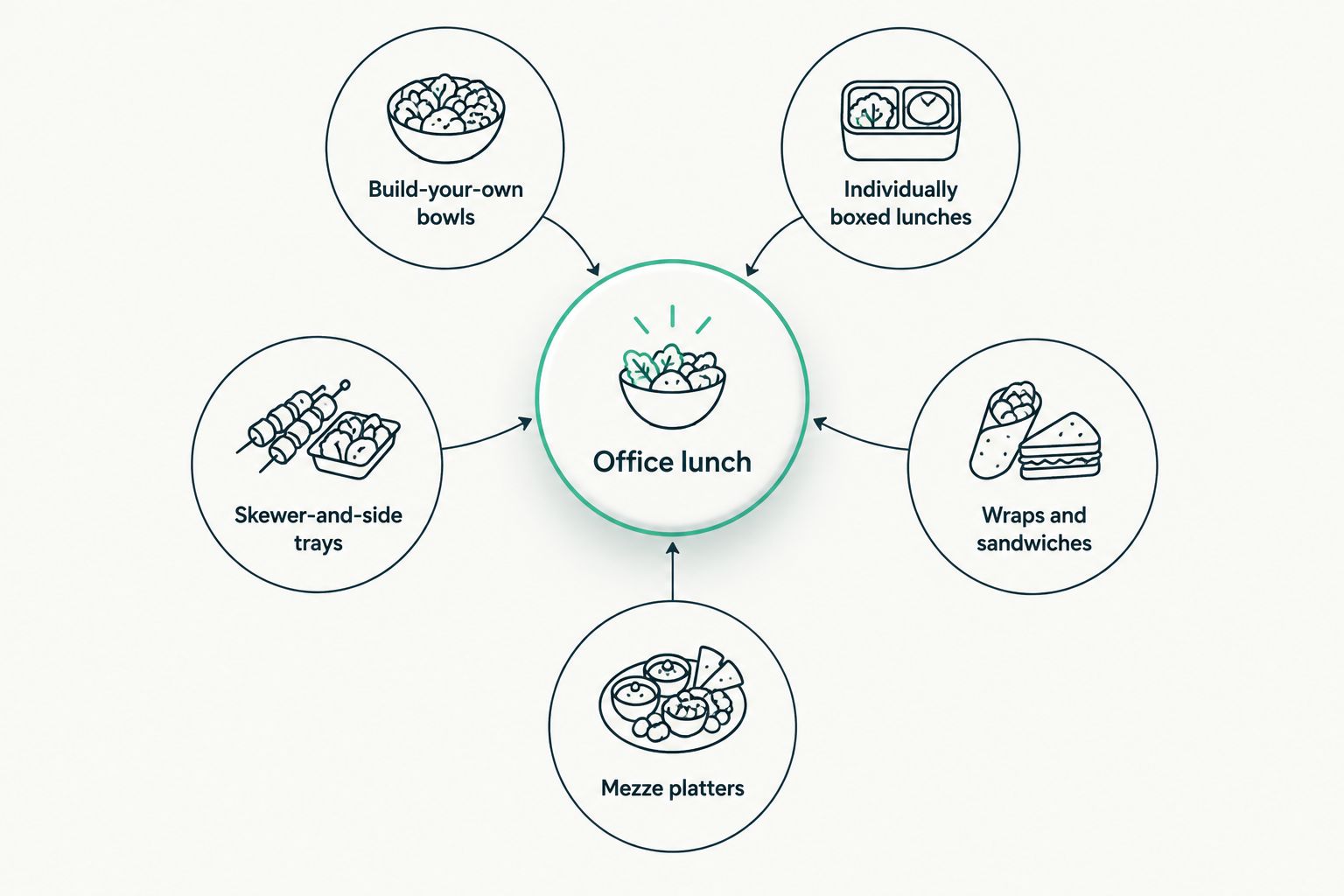
Mediterranean catering options at a glance
| Rank and option | Best for | Standout feature | Key limitation |
|---|---|---|---|
| 1. Build-your-own bowls | Mixed-preference teams | Diners assemble their own combinations | Requires a serving area and separate utensils |
| 2. Individually boxed lunches | Working meetings | Each attendee receives a complete meal | Changes require matching people to meals |
| 3. Wraps and sandwiches | Staggered lunch breaks | Handheld format suits individual collection | Fillings are difficult to change after assembly |
| 4. Mezze platters | Social team lunches | Shared dishes encourage choosing and sharing | Dips and sides do not automatically form a complete lunch |
| 5. Skewer-and-side trays | Seated team meals | A main dish anchors a shared lunch | Shared portions need a clear serving plan |
These are menu formats to request, not claims about a particular restaurant's offerings. Check the actual dishes, ingredients, and service details before ordering.
1. Build-your-own bowls: best for mixed-preference teams
Build-your-own bowls separate the meal into components so diners choose what goes into their lunch. A menu might combine a grain or greens base, a main component, vegetables, and sauces; confirm the restaurant's actual choices rather than assuming those components are included.
This is the default recommendation for a 2026 office lunch when preferences differ and you have room for a serving line. Keep sauces and garnishes separate where the restaurant can accommodate that request. Separation supports choice; it does not establish an allergy-safe meal.
Build-your-own bowls pros:
- Diners choose their own combinations.
- Separate components make preferences easier to accommodate.
- The same format supports different meal combinations without assigning complete boxes.
Build-your-own bowls cons:
- Assembly takes place at the serving table.
- Shared utensils create cross-contact concerns that need direct discussion with the restaurant.
Best for: Teams eating together with different food preferences and enough space to assemble meals.
Ask what each tray serves and how the restaurant defines a portion. Do not assume equal tray sizes mean equal numbers of meals.
Verdict: Buy build-your-own bowls for choice; skip them when lunch must stay at the meeting table.
2. Individually boxed lunches: best for working meetings
An individually boxed lunch packages one person's meal separately. The contents depend on the restaurant, so check whether the box includes a main dish, sides, sauces, and utensils rather than treating the word boxed as a complete specification.
For presentations and client meetings, distribution is the main advantage. You can place meals at seats or organize a collection point before the session begins. Named labels are useful only when the restaurant confirms it can provide them.
Individually boxed lunches pros:
- Distribution does not require a shared serving line.
- Separate meals support clear assignment to attendees.
- Each diner receives a defined meal rather than serving from shared trays.
Individually boxed lunches cons:
- Last-minute meal changes require careful reassignment.
- Individual packaging creates more items to collect after lunch.
Best for: Training sessions, presentations, and meetings where people need to stay seated.
Request a written meal list and compare it with attendee requirements. A dietary label on a box is not a substitute for confirmed ingredients and preparation details.
Verdict: Buy individually boxed lunches when meeting continuity matters more than serving-table choice.
3. Wraps and sandwiches: best for staggered lunch breaks
Wraps and sandwiches package fillings inside bread, making the main dish handheld. Confirm the bread, filling, sauce, and accompanying sides for each option. A vegetable filling alone does not establish that the complete sandwich is vegan or suitable for a particular allergy.
For staggered breaks, plan collection around food-handling instructions rather than leaving the entire order unattended. Ask the restaurant how to hold the food until people collect it, and assign someone to manage that process.
Wraps and sandwiches pros:
- The main dish does not require diners to assemble components.
- Separate portions suit individual collection.
- Different fillings can be assigned before lunch.
Wraps and sandwiches cons:
- Assembled fillings are difficult to remove completely.
- Bread and sauces need the same dietary scrutiny as the main filling.
Best for: Teams collecting lunch individually rather than sitting down together.
Ask for clear identification of each variety. If several wraps look alike, appearance is not a reliable way to identify a dietary meal.
Verdict: Buy wraps and sandwiches for individual collection; skip them when diners need extensive component-level choice.
4. Mezze platters: best for social team lunches
Mezze is a selection of small dishes served together. Depending on the menu, a spread can include dips, vegetables, salads, bread, and other small plates. Check every component; Mediterranean describes a broad food category, not a fixed ingredient list.
Choose this format when sharing is part of the lunch. Before ordering, distinguish a meal-sized spread from an appetizer selection. Ask the restaurant to explain what makes the proposed order a complete lunch for your headcount.
Mezze platters pros:
- Diners can select among several small dishes.
- Shared platters suit a conversational lunch.
- Separate dishes allow people to leave out unwanted components.
Mezze platters cons:
- A collection of dips and sides is not automatically a complete meal.
- Shared dishes require serving utensils and attention to cross-contact.
Best for: Team lunches where people have time to sit, share, and choose several dishes.
For your 2026 order, list the actual dishes instead of requesting a Mediterranean assortment without further detail. Include bread, serving utensils, and any separately prepared meals in that discussion.
Verdict: Buy mezze platters for a shared lunch, but confirm meal completeness before approving the order.
5. Skewer-and-side trays: best for seated team meals
Skewer-and-side catering centers lunch on a defined main dish with accompanying sides. Check which mains the restaurant prepares, how portions are counted, and whether food arrives on skewers or has already been removed for serving.
This format suits a seated lunch where attendees collect a plate before eating together. Arrange the main dishes and sides so diners can see what belongs to the meal without searching through closed containers.
Skewer-and-side trays pros:
- A defined main dish gives the meal a clear structure.
- Shared sides let diners choose their accompaniments.
- The format works with a planned serving station.
Skewer-and-side trays cons:
- Uneven self-serving can leave later diners with different portions.
- Separate dietary meals still need explicit arrangements.
Best for: Teams taking a shared, seated lunch break with a designated serving area.
Confirm whether portions are specified per person, by piece, or by tray. Those descriptions are not interchangeable. If skewers remain in the food, include their collection in the cleanup plan.
Verdict: Buy skewer-and-side trays for a structured shared meal; skip them without a portioning plan.
How the options rank
This 2026 ranking prioritizes meeting fit, flexibility, dietary clarity, serving workload, and delivery coordination. It compares formats rather than claiming restaurant tastings, delivery tests, or customer ratings.
Build-your-own bowls take the default position because diners can choose components. Boxed lunches rank next because they remove the serving-line step. The remaining options win in narrower situations: individual collection, social sharing, or a structured seated meal.
LoveCater supports corporate catering coordination through group orders and real-time delivery tracking. Those features address ordering and arrival visibility; they do not replace restaurant confirmation of ingredients, portions, or food-handling instructions.
Before you place the office lunch order
Use this sequence to turn a preferred format into an order your team can receive and serve.
Confirm attendance
Use the expected in-office headcount, not the full employee directory. For hybrid teams, ask who will actually attend on the lunch date. Set one response deadline so meal selections and headcount refer to the same group.
Record dietary requirements
Keep allergies separate from preferences in your notes. Ask the restaurant about ingredients, preparation, and cross-contact before presenting a meal as suitable. Hummus commonly contains sesame through tahini, and ordinary wheat pita contains gluten; check the actual recipes and bread supplied.
Assign lunch ownership
Assign 1 lunch lead to manage the final order and receive delivery updates. That person should know who can approve substitutions and where the food belongs. Include 2 delivery checkpoints in the plan: building entry and the final serving location.
Check the serving plan
Review 3 meal components before approval: the main dish, accompaniments, and sauces. Then confirm plates, utensils, serving tools, and food-holding instructions separately. Do not assume those items come with catering because the menu shows trays.
Write delivery instructions
Include the receiving person's contact details, building access process, and destination inside the office. Real-time tracking helps you follow arrival, but it does not tell a driver which entrance accepts catering deliveries.
Plan your office lunch
Order catering from local restaurants with group orders and real-time delivery tracking.
Which Mediterranean catering should you choose?
Choose build-your-own bowls unless your meeting format gives you a clear reason not to. Switch to boxed lunches for seated working sessions, wraps for individual collection, mezze for social sharing, and skewer trays for a structured shared meal.
For 2026 office lunches, make the decision in that order: meeting needs, dietary requirements, then menu preferences. LoveCater connects your business with local restaurants; the restaurant's confirmed order details determine whether a particular meal fits your team.
FAQ
What's the best Mediterranean catering for office lunches?
Build-your-own bowls are the best default for teams with different food preferences because diners choose their own components. Choose boxed lunches instead when attendees need to remain seated during a meeting.
Are Mediterranean boxed lunches better than a buffet?
Mediterranean boxed lunches are better for seated working meetings; a buffet is better when diners need component-level choice. Decide whether easy distribution or meal customization matters more for your event.
Is Mediterranean catering suitable for vegetarians and vegans?
Suitability depends on the specific dishes and their ingredients, not the Mediterranean label. Confirm sauces, dairy, eggs, and preparation details with the restaurant before assigning a meal.
Is hummus safe for someone with a sesame allergy?
Do not assume hummus is safe for someone with a sesame allergy: hummus commonly contains tahini, which is made from sesame. Confirm the recipe and cross-contact practices directly with the restaurant.
How much Mediterranean food should I order for an office lunch?
Base the order on confirmed attendance and the restaurant's stated meal portions. Ask whether each quantity describes complete meals, individual pieces, or shared trays before approving it.
What should I confirm before ordering Mediterranean catering?
Confirm headcount, dietary requirements, meal contents, serving equipment, and delivery instructions. Also ask how the food should be held until service, especially when employees take staggered breaks.
Can LoveCater help with corporate lunch orders?
LoveCater is an online ordering platform connecting local restaurants with businesses and groups needing catering. Its stated features include corporate catering, group orders, and real-time delivery tracking.
One last thing
Ask the restaurant to describe one complete serving before you approve shared trays. A piece count tells you how many pieces arrive, not whether each attendee receives a complete lunch. That clarification belongs in the order confirmation, not in a discussion beside an empty serving tray.