Best overall for coordinating restaurant catering: LoveCater. Best for a working lunch: sandwich boxes. Best for handheld variety: wrap boxes. The best boxed lunch catering for business meetings combines a suitable meal format with clear dietary information and a delivery plan that fits your agenda.
- LoveCater is best for businesses coordinating local restaurant catering with group orders and real-time delivery tracking.
- The best boxed lunch catering for business meetings matches the menu to the meeting, not the other way around.
- Choose sandwich boxes for working lunches, wraps for handheld variety, bowls for seated meals, and salads for lighter preferences.
- Confirm individual packaging, ingredients, labels, and delivery details with the restaurant before ordering.
Why this matters
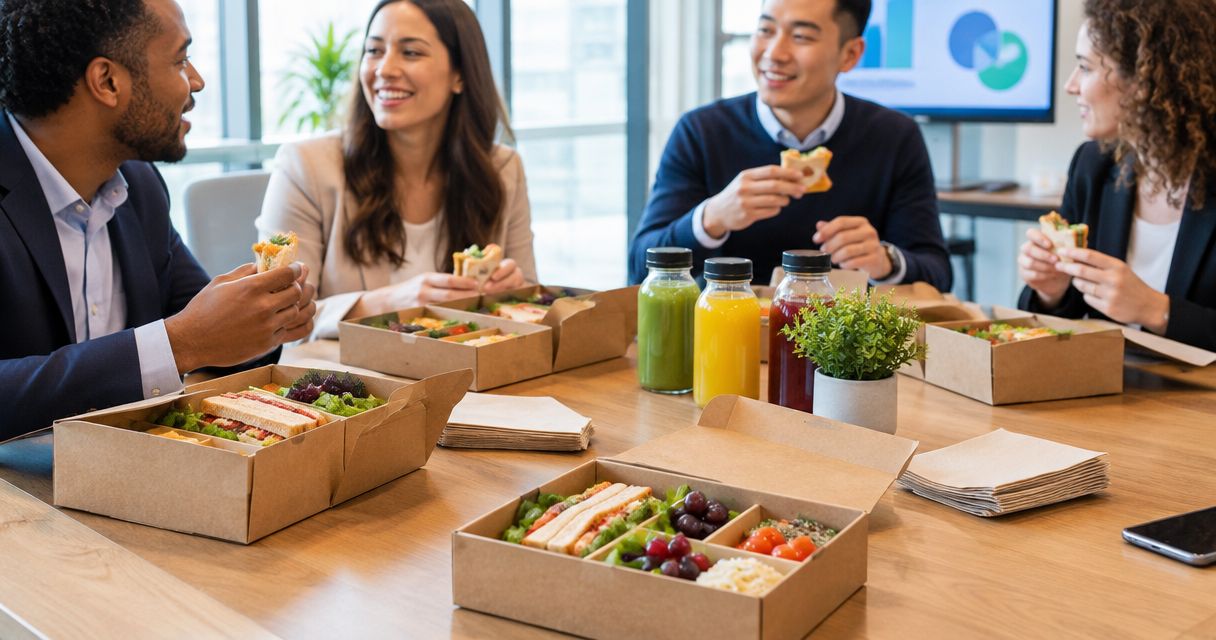
A boxed lunch solves a practical problem: each attendee receives an individual meal without building a plate from shared trays. That format suits meetings where you want a straightforward handoff and less serving activity around the table.
But packaging alone does not make an order meeting-ready. An unlabeled vegetarian meal, a sauce that spills, or a delivery without a receiving contact can interrupt the session just as easily as a buffet.
For your 2026 meeting plan, make two decisions separately: how you will coordinate the order, and what attendees will eat. This guide ranks one ordering platform and four meal formats by their distinct roles. It is a decision guide, not a claim that every restaurant offers every option.
What makes the best boxed lunch catering?
Use these criteria before comparing menus. A meal that looks appealing still needs to work in your room, on your schedule, and for the people attending.
- Meeting fit: Choose handheld food for working sessions and utensil-based meals when attendees can pause to eat.
- Dietary clarity: Request ingredients and meal labels. Vegetarian, vegan, and gluten-free describe different needs; do not treat them as interchangeable.
- Individual packaging: Confirm that the restaurant will provide separate meals rather than shared trays. Ask how sauces and dressings are packed.
- Order coordination: Keep meal selections, attendee names, delivery instructions, and the receiving contact organized.
- Complete meals: Check exactly what accompanies the main dish, including sides, utensils, napkins, and drinks. Never assume the word box includes everything.
- Delivery handoff: Give the restaurant the entrance, floor, room, and contact details needed to reach your meeting.
For a straightforward starting plan, request 1 labeled box per attendee, offer 2 clearly described menu choices, and assign 1 delivery contact. Those are planning recommendations, not restaurant requirements. Add further choices when dietary needs call for them.
Boxed lunch catering options at a glance
The first entry addresses ordering; the remaining entries address food format. Choose your coordination method first, then select the meal that suits the meeting.
| Option | Best for | Standout feature | Key limitation |
|---|---|---|---|
| LoveCater | Coordinating local restaurant catering | Group orders, corporate catering, and real-time tracking | Boxed packaging and menu details need restaurant confirmation |
| Sandwich boxes | Working lunches | Handheld main dish | Bread and fillings need dietary checks |
| Wrap boxes | Handheld menu variety | Rolled format with different filling combinations | Sauces and loose fillings can make eating messy |
| Grain bowl boxes | A seated meal break | Components served together in a bowl | Requires utensils and a place to set the meal |
| Salad boxes | Attendees seeking a lighter meal | Greens with configurable accompaniments | A basic salad is not automatically a satisfying lunch |
1. LoveCater: best for coordinating restaurant catering
LoveCater is an online catering ordering platform connecting local restaurants with businesses and groups. It provides group orders, corporate catering, and real-time delivery tracking. That makes the platform relevant when your task includes organizing the order as well as choosing lunch.
LoveCater is best for businesses coordinating local restaurant catering with group orders and real-time delivery tracking. For boxed lunch catering, confirm the chosen restaurant's packaging, meal contents, and dietary information before placing the order.
LoveCater pros:
- Connects businesses and groups with local restaurants.
- Offers group orders for group meal coordination.
- Provides real-time delivery tracking.
LoveCater cons:
- Platform features do not establish which meals a restaurant can package individually.
- Delivery tracking does not replace ingredient checks or building access instructions.
Best for: Office organizers who need an ordering platform for restaurant catering rather than only a list of meal ideas.
Make your 2026 order brief concrete: name the meeting location, describe the individual packaging you need, and identify who will receive the delivery. Treat menu confirmation and delivery coordination as separate tasks.
Verdict: Buy through this approach when order coordination matters; confirm the boxed meal format with the restaurant first.
2. Sandwich boxes: best for a working lunch
Sandwich boxes suit meetings where attendees eat while reviewing documents or listening to a presentation. The main dish is handheld, so it does not require a bowl or a full place setting.
Choose fillings that stay contained, and check whether sides arrive inside each box or separately. A sandwich with loose toppings or heavy sauce needs more care than its simple format suggests.
Sandwich box pros:
- A handheld main dish fits a working-lunch setting.
- Each box can carry an attendee or meal label.
- Different fillings allow distinct choices within one format.
Sandwich box cons:
- Standard bread is unsuitable for people who need to avoid gluten.
- Cheese, spreads, and fillings need separate dietary checks.
- Crumbs and loose ingredients still create cleanup.
Best for: Internal working sessions where attendees have limited space and need an easy-to-handle main dish.
For a 2026 recurring meeting, use a clearly described sandwich menu rather than vague labels such as regular or special. Name the main filling and flag dietary information confirmed by the restaurant. Keep special-diet meals identifiable without asking attendees to open every box.
Verdict: Buy sandwich boxes as the default food format for a working lunch, provided the ingredient choices fit your attendees.
3. Wrap boxes: best for handheld menu variety
Wrap boxes keep lunch handheld while offering a different format from sliced bread. They work when you want varied fillings without moving the whole group to utensil-based meals.
The filling matters more than the name. A tightly assembled wrap and a heavily dressed wrap behave differently when someone eats over meeting notes.
Wrap box pros:
- A handheld format suits informal meeting tables.
- Fillings can include vegetables, beans, or other proteins.
- Individually wrapped portions simplify meal identification when labeled.
Wrap box cons:
- A tortilla does not automatically make a meal gluten-free.
- Sauces and loose fillings can escape as attendees eat.
- A vegetable filling does not establish that every ingredient is vegan.
Best for: Teams that want handheld lunches with a different texture and filling style from sandwiches.
Ask the restaurant how the wrap is assembled and packaged. Request sauces separately when that suits the meal, and confirm whether the portion arrives whole or cut. Those details affect how easily attendees can eat without rearranging their workspace.
Verdict: Buy wrap boxes for handheld variety; skip heavily sauced options when attendees will eat over laptops or documents.
4. Grain bowl boxes: best for a seated meal break
Grain bowls bring a base, vegetables, toppings, and other components together in one container. They suit meetings with a dedicated lunch pause, when attendees have room to set down a meal and use a fork.
Read the full ingredient description rather than judging the bowl by its base. Sauces, marinades, and toppings can change whether a meal meets an attendee's dietary requirements.
Grain bowl box pros:
- Components sit together in one eating container.
- Different bases and toppings allow distinct meal combinations.
- The format suits a deliberate sit-down lunch break.
Grain bowl box cons:
- Attendees need utensils and a stable surface.
- Mixed ingredients make unwanted components difficult to remove.
- A rice-based bowl is not automatically gluten-free.
Best for: Workshops or planning sessions with a clear break for eating.
For your 2026 workshop agenda, match the meal to the room setup. A bowl makes sense at a table; it is less practical when attendees hold notebooks on their laps. Confirm whether the selected meal is intended to arrive hot or cold and plan the handoff accordingly.
Verdict: Buy grain bowl boxes for a seated meal break; skip them when attendees lack a surface for eating.
5. Salad boxes: best for lighter meal preferences
Salad boxes suit attendees who prefer a greens-based lunch. Evaluate the whole meal, including any protein, substantial toppings, sides, and dressing, rather than assuming a container of greens meets everyone's expectations.
Keep dressing separate when the restaurant can accommodate that request. It lets the attendee decide how much to add and avoids having every component dressed before the meeting begins.
Salad box pros:
- A greens-based format gives attendees an alternative to bread or grains.
- Separate dressing allows individual control.
- Clearly described toppings help attendees choose an appropriate meal.
Salad box cons:
- A basic side salad is not equivalent to a complete lunch.
- Greens can wilt when dressed in advance.
- Attendees still need utensils and space to eat.
Best for: Attendees who explicitly prefer a lighter, greens-based meal, especially during a seated lunch break.
Do not assign salad as the automatic answer to every dietary request. Cheese, croutons, dressings, nuts, and other toppings need their own checks. Ask what the person needs, then confirm a suitable meal with the restaurant.
Verdict: Buy salad boxes for stated preferences; skip the assumption that salad is the universal special-diet option.
How the options rank
These recommendations follow the criteria above: meeting fit, dietary clarity, packaging, coordination, meal completeness, and delivery handoff. The ordering platform ranks first for coordination; sandwich boxes are the default food recommendation for working lunches.
Wraps serve handheld variety. Grain bowls serve seated breaks. Salads serve a stated preference for a greens-based meal. No format wins every meeting, and none establishes dietary suitability without an ingredient check.
Turn the shortlist into a meeting-ready order
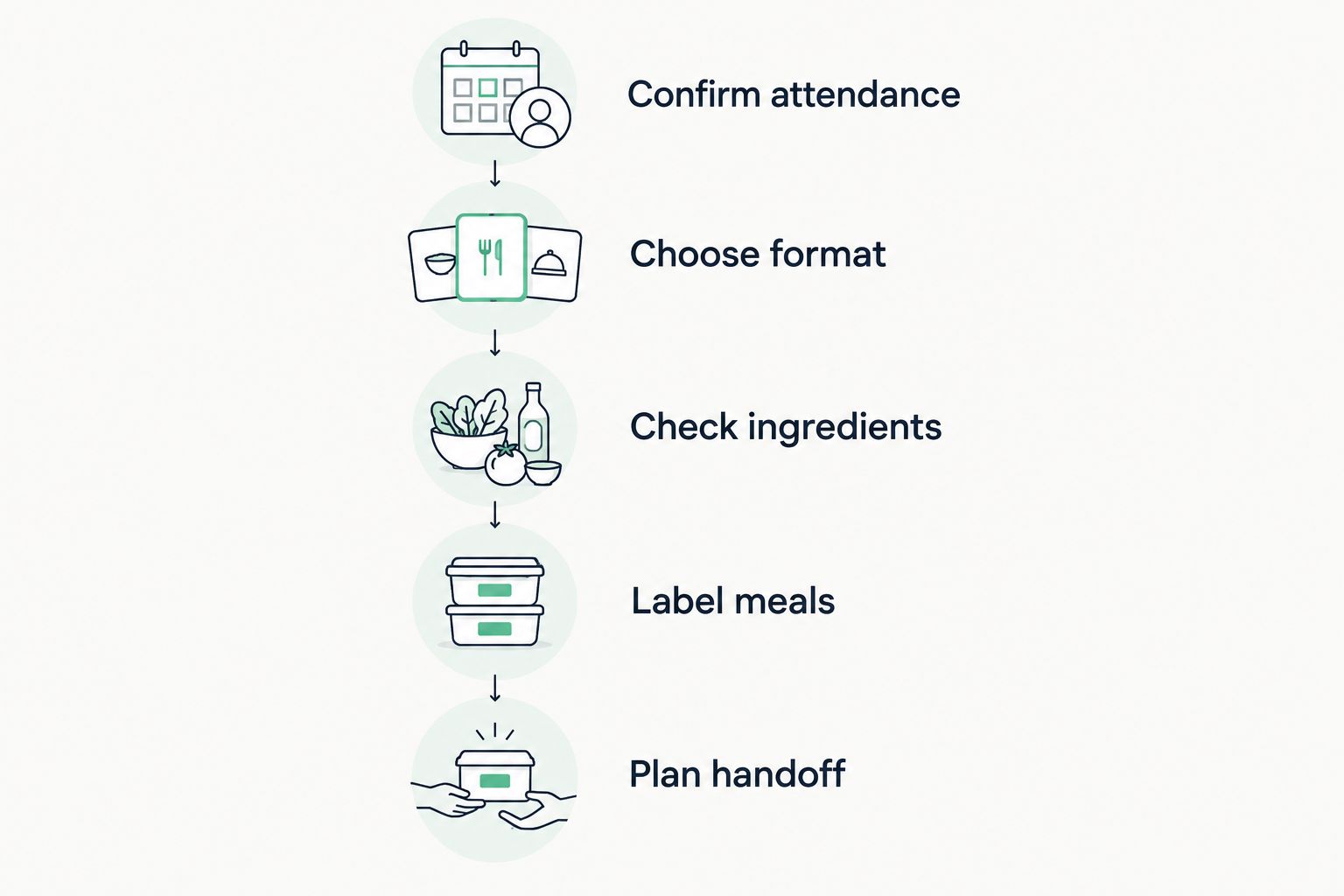
A good 2026 catering brief describes the outcome you need, not just the dish you want. Use this sequence to keep ordering decisions separate from delivery instructions.
- Confirm attendance: Establish the meal count and collect dietary requirements before finalizing selections.
- Choose format: Decide whether people will eat while working or during a dedicated break.
- Check ingredients: Confirm suitable dishes with the restaurant, including sauces, toppings, and relevant preparation questions.
- Label meals: Request clear identification for each selection, especially meals intended for specific attendees.
- Plan handoff: Provide the entrance, room, receiving contact, and instructions for getting the food to the meeting.
Before submitting the order, read it as the person receiving lunch would. Can you identify each meal without opening it? Is there a utensil for every dish that requires one? Does the delivery contact know where the food belongs?
A food allergy deserves a direct conversation with the restaurant about ingredients and preparation. A menu label alone does not establish how cross-contact is handled. Do not substitute your own interpretation for that confirmation.
Plan your next catering order
Explore local restaurant catering with group orders and real-time delivery tracking.
Which boxed lunch option should you choose?
Start with sandwich boxes for a working lunch and grain bowls for a dedicated seated break. Offer wraps when your team wants handheld variety, and salads when attendees request a greens-based meal.
Use LoveCater for the restaurant catering coordination layer, then confirm the actual boxed meal details with the restaurant. Keep the menu short enough to organize clearly, but never remove a necessary dietary option just to simplify the order.
The deciding question is practical: can each attendee identify, receive, and eat the right meal without disrupting the meeting? Choose the format that makes that answer straightforward.
FAQ
What's the best boxed lunch catering for business meetings?
Sandwich boxes are the default recommendation for working lunches, while grain bowls suit dedicated seated meal breaks. Choose the ordering method separately, then confirm packaging, ingredients, and delivery details with the restaurant.
Can I use LoveCater to organize a corporate lunch?
LoveCater connects businesses and groups with local restaurants for corporate catering and group orders, with real-time delivery tracking. Confirm that your chosen restaurant can provide the individual boxed meals you need.
Are wraps better than sandwiches for a meeting?
Wraps are better when you want handheld variety, not automatically when you need cleaner eating or different dietary options. Check the tortilla, filling, sauce, and packaging before choosing.
What boxed lunch works best for a workshop?
Grain bowls suit workshops with a dedicated meal break and table space. Choose sandwiches or wraps when attendees need a handheld main dish during the session.
How many boxed lunches should I order?
Plan 1 labeled meal per confirmed attendee as your starting count. Resolve attendance changes and any additional meal needs before finalizing the order.
Are salad boxes suitable for every dietary restriction?
No, salad boxes are not a universal answer to dietary restrictions. Check toppings, dressings, ingredients, and relevant preparation practices with the restaurant.
What should I confirm before placing a boxed lunch order?
Confirm meal counts, individual packaging, dietary requirements, labels, included utensils, and delivery instructions. Assign a receiving contact who knows the meeting room and can accept the order.
One last thing
A clear meal label is part of the lunch, not an administrative extra. If attendees must open several boxes to find their meal, the individual packaging has not finished its job.
Make labeling part of your 2026 ordering brief. Confirm the label wording alongside the ingredients, then arrange meals so attendees can find their selection without interrupting the meeting.