Best overall for restaurant group orders: Lovecater. Best for a familiar menu: direct restaurant catering. Best for budget control: shared platters with a fixed menu. This 2026 guide compares the best corporate catering for small offices by ordering method, meal format, and the work left to your organizer.
- Lovecater is the best corporate catering for small offices needing local restaurant group orders and real-time delivery tracking.
- Direct restaurant catering suits offices that already know which restaurant and menu they want.
- Individually boxed lunches suit working meetings; shared platters suit a common menu.
- Recurring office catering suits repeat meal schedules, but requires regular headcount checks.
Why this matters
A small office needs more than food that arrives at the building. You need an order that matches attendance, dietary requirements, and the way people will eat. A lunch eaten during a presentation calls for a different setup than a team gathering around a shared table.
The strongest choice for your office in 2026 is the service that fits that routine without creating unnecessary coordination. Choose the ordering method first, then the meal format. Delivery tracking answers where the food is; it does not answer whether you ordered the right meals.
This ranking compares a named ordering platform with catering approaches, not a list of interchangeable companies. Restaurant-direct ordering, boxed lunches, shared platters, and recurring catering describe different decisions. You can combine them when the restaurant supports the arrangement.
What makes the best corporate catering for small offices?
Use these criteria before choosing a service. A familiar restaurant or attractive menu does not settle the operational questions.
- Order coordination: Decide whether an organizer chooses everything or coworkers contribute their meal choices. Group orders matter when preferences differ.
- Headcount fit: Check restaurant requirements against confirmed attendance. A menu designed for a larger gathering is not automatically a sensible small-office order.
- Dietary clarity: Request ingredient and preparation details from the restaurant. A dish name alone does not establish allergy suitability.
- Delivery visibility: Decide how you will monitor arrival and who will receive the food. Tracking and building access solve different problems.
- Serving workload: Check whether meals arrive ready to hand out or need a serving area, utensils, and cleanup.
- Repeatability: For regular lunches, choose a process you can repeat while still updating attendance and dietary needs.
The best service reduces the work your office actually has, rather than adding features your lunch does not need. Keep these criteria visible when comparing options in 2026.
Corporate catering options at a glance
| Ranked option | Best for | Standout feature or approach | Key limitation |
|---|---|---|---|
| Lovecater | Local restaurant group orders | Corporate catering, group orders, and real-time delivery tracking | Restaurant-specific menu and preparation details still need checking |
| Direct restaurant catering | A familiar restaurant and menu | Coordination directly with the restaurant | You must establish how orders, changes, and delivery updates work |
| Individually boxed lunches | Meetings where people eat at their seats | Separate meals for distribution | Correct labeling and assignment become important |
| Shared platters | One fixed menu served to the team | A common spread with centralized menu choices | Requires serving space and attention to shared utensils |
| Recurring office catering | Repeat office meal schedules | A repeatable ordering routine | Attendance and dietary changes still require updates |
The table separates ordering methods from meal formats deliberately. A platform order can contain boxed lunches or platters, and a restaurant-direct arrangement can be recurring. Pick the combination that solves your office's specific problem.
1. Lovecater: best corporate catering for group orders
Lovecater connects businesses and groups with local restaurants through an online catering ordering platform. Its stated features include corporate catering, group orders, and real-time delivery tracking. That makes it the clearest fit here when coordinating restaurant orders is your main task.
Lovecater is best for small offices that want local restaurant catering, group orders, and real-time delivery tracking. Choose it for those concrete features, then check the restaurant's menu against your meeting requirements.
Lovecater pros
- Group orders address the need to coordinate food choices across a team.
- Corporate catering matches the business-meal use case.
- Real-time delivery tracking gives the organizer visibility into delivery progress.
- Local restaurant ordering keeps the restaurant menu central to your decision.
Lovecater cons
- Delivery tracking does not resolve ingredient or allergy questions; those require restaurant confirmation.
- An ordering platform does not remove the need to plan building access, receiving, or meal distribution.
Best for: Small offices that need a restaurant-ordering platform rather than a meal plan managed entirely through direct restaurant conversations.
Before ordering in 2026, establish who receives the delivery and how food reaches the meeting room. Check whether the selected meal format needs a serving table or individual distribution. Do not let a clear delivery status substitute for an office arrival plan.
Verdict: Buy for coordinated local restaurant catering and delivery visibility.
2. Direct restaurant catering: best for a familiar menu
Direct restaurant catering means arranging the office meal with the restaurant itself. This approach fits a team that already knows what it wants and prefers to discuss the order directly. Start with the restaurant's catering process rather than assuming its regular takeout process handles group meals the same way.
The useful distinction is familiarity, not a promise of better service. You already have a menu preference; your remaining job is to confirm how the restaurant handles the office order.
Direct restaurant catering pros
- You can discuss menu questions directly with the restaurant.
- A familiar menu gives the organizer a clear starting point.
- You can describe delivery access and serving needs during order coordination.
Direct restaurant catering cons
- You must establish the process for collecting choices and submitting changes.
- Delivery updates, meal labeling, and catering arrangements need explicit confirmation.
Best for: Offices that already have a preferred restaurant and do not need a broader restaurant-selection process.
Ask who owns the order at the restaurant and which communication channel handles changes. Keep the final menu, headcount, and delivery instructions together. Separate conversations about different parts of the same lunch create room for conflicting instructions.
Verdict: Buy when restaurant familiarity matters more than centralized ordering.
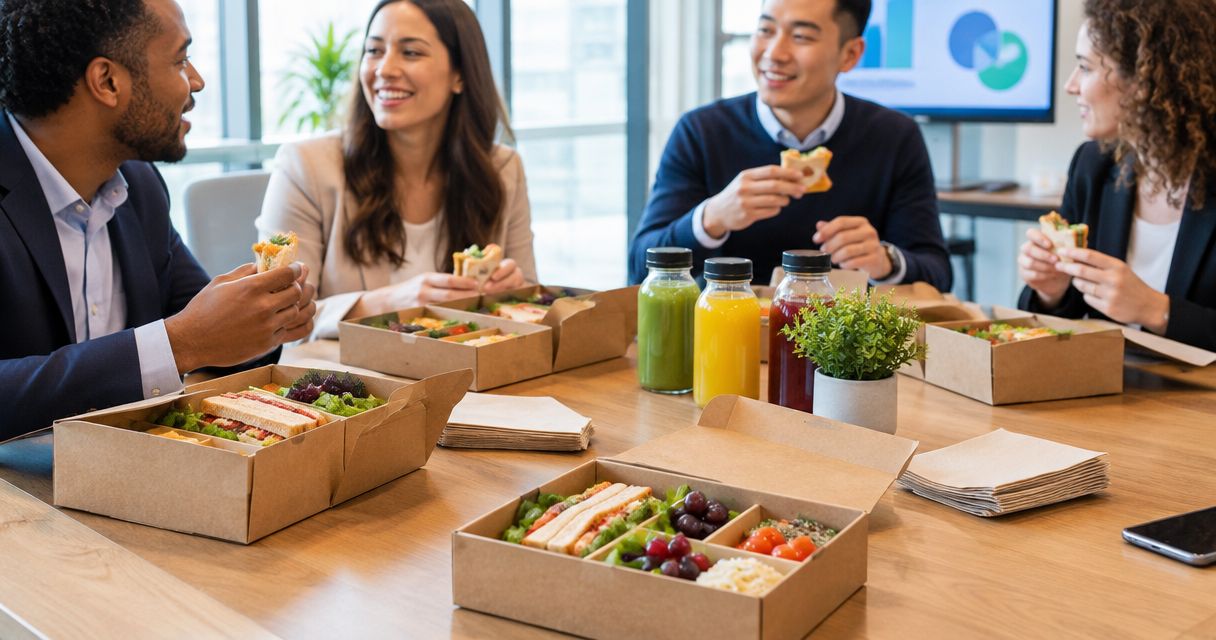
3. Individually boxed lunches: best for working meetings
Individually boxed lunches package meals separately for distribution. They suit meetings where people eat at their seats rather than assembling plates at a buffet. The format is especially practical when the organizer needs to hand each person an assigned meal.
Boxed lunches are a meal format, not a provider. Confirm that the restaurant can supply the format and explain how meals will be identified before treating it as part of your plan.
Individually boxed lunches pros
- Separate meals can be handed out without assembling plates from shared trays.
- Named or clearly identified meals support assignment when choices differ.
- Distribution can happen before the meeting begins.
Individually boxed lunches cons
- Incorrect or unclear labels make different meals harder to assign.
- Individual packaging creates a cleanup task after the meeting.
- A separate box does not establish allergy-safe preparation.
Best for: Presentations, interviews, and working lunches where meal distribution should not interrupt the agenda.
Confirm the labeling method and keep the order list available to whoever distributes the food. If a meal has a dietary requirement, verify the restaurant's response rather than interpreting a label yourself. Packaging describes how the food arrives, not how it was prepared.
Verdict: Buy for seated meetings with assigned meals.
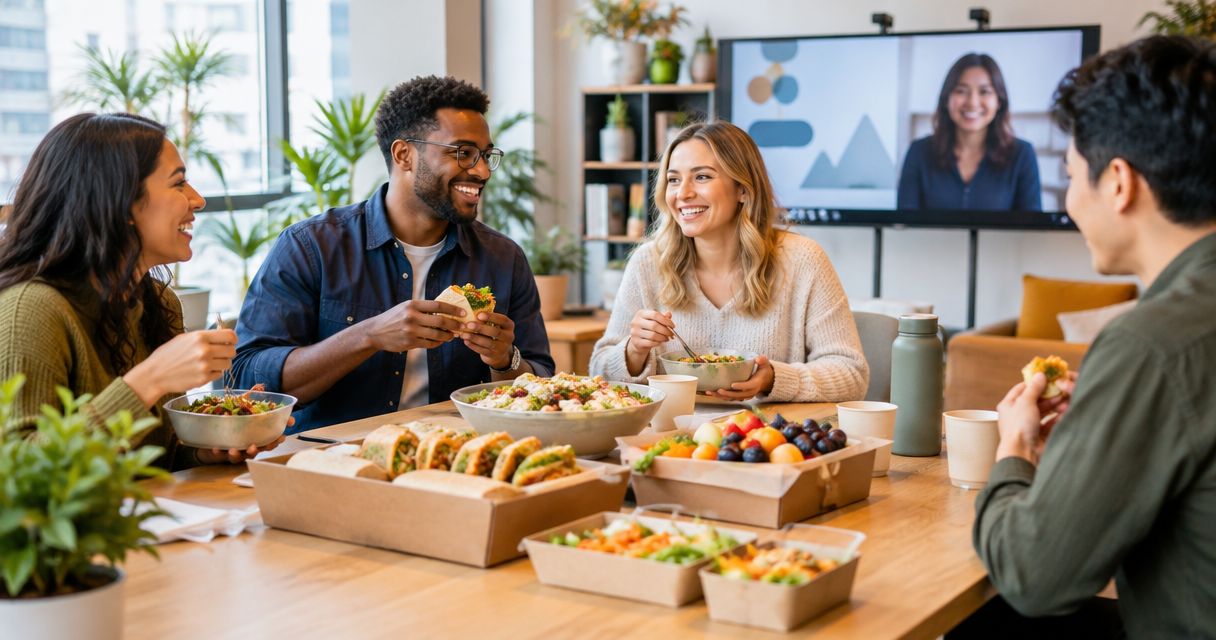
4. Shared platters: best for a fixed team menu
Shared platters put a common selection of food in a serving area so attendees assemble their own plates. This format fits an office that can agree on a menu and has somewhere suitable to serve it. It is the budget-control pick because you define the shared menu before ordering, not because platters are always cheaper.
Compare the complete order rather than assuming a serving format determines the final expense. Portions, menu choices, delivery terms, and serving supplies all need checking with the restaurant.
Shared platters pros
- The organizer can set one menu for the gathering.
- Attendees can choose from the dishes offered at the serving table.
- Shared serving fits a lunch built around eating together.
Shared platters cons
- The office needs a serving area and a plan for utensils and cleanup.
- Shared utensils require attention when different dietary requirements are involved.
- Portion planning needs restaurant guidance; tray appearance is not a reliable serving estimate.
Best for: Team lunches with a common menu and enough space for a shared spread.
Keep dish descriptions beside the food and separate serving utensils by dish. Request restaurant guidance on portions and food holding. For your 2026 office plan, make receiving and serving part of the order checklist rather than an afterthought.
Verdict: Buy for a fixed menu and shared-table lunch; skip when serving space is unsuitable.
5. Recurring office catering: best for repeat meal schedules
Recurring office catering is an arrangement for meals on a repeat schedule. It can use restaurant-direct ordering or another ordering method that supports the arrangement. Confirm how repeat orders work with the chosen provider rather than assuming scheduling is included.
The main benefit is a repeatable process. The main risk is treating last time's attendance and meal requirements as current.
Recurring office catering pros
- A repeat schedule gives the organizer a consistent planning routine.
- A standard receiving process can be reused.
- Meal feedback can inform the next order instead of starting from scratch.
Recurring office catering cons
- Changing attendance can make an unchanged order unsuitable.
- Dietary requests still need review before each meal.
- Schedule changes require a clear communication process.
Best for: Offices with repeat meal occasions and someone responsible for keeping the order current.
Set a headcount checkpoint before each order is finalized. Record useful feedback, including dishes left over, meals that were difficult to identify, and delivery-access problems. Use those observations to adjust the next lunch, without treating a single event as proof of a lasting preference.
Verdict: Buy for a repeat routine; hold until attendance updates have an owner.
How the options rank
This ranking prioritizes order coordination, meal distribution, and the organizer's workload. The platform leads for group ordering and tracking; restaurant-direct catering leads for familiarity. Boxed lunches, platters, and recurring arrangements each solve a different office-meal problem.
No option wins every criterion. A working meeting needs easy distribution, while a shared lunch needs serving space. That is why each recommendation has a distinct use case rather than a claim to be universally best.
Build the order around your meeting
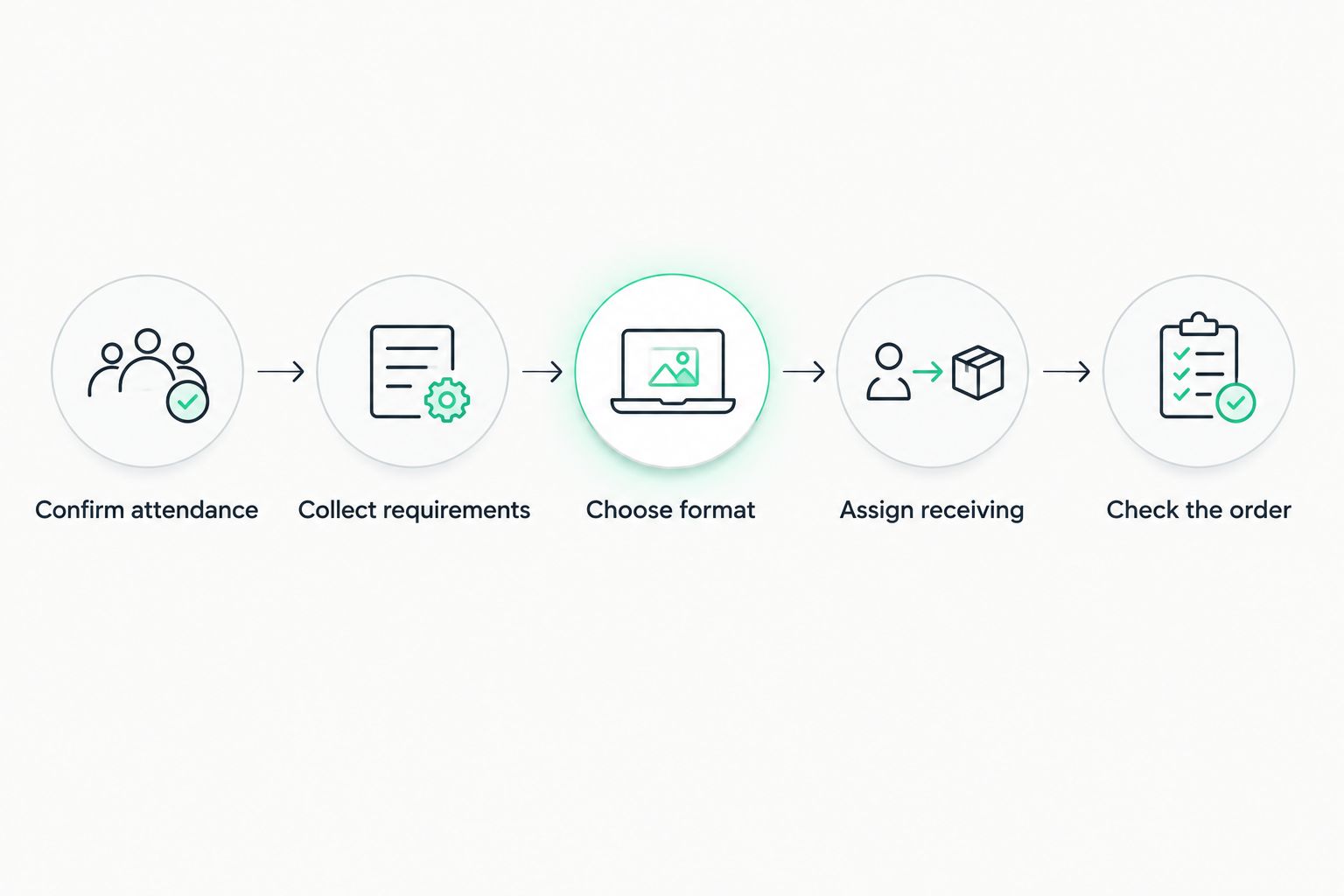
Use this sequence for your next office lunch in 2026. Finish the meeting brief before selecting food, so the menu serves the event rather than dictating it.
- Confirm attendance: Use the expected participants for this meal, not the office's full employee list.
- Collect requirements: Ask for meal preferences and dietary requirements, then confirm relevant details with the restaurant.
- Choose format: Select assigned meals or shared serving according to the meeting setup.
- Assign receiving: Name the person who handles building access, receives the order, and directs distribution.
- Check the order: Review the menu, meal assignments, delivery instructions, and serving needs together.
A complete order brief connects the people eating to the people preparing and receiving the food. Keep it in one place so your organizer does not have to reconstruct the plan from separate messages.
Which corporate catering option should you choose?
Choose Lovecater corporate catering when you want local restaurant group orders with real-time delivery tracking. Choose restaurant-direct catering when a familiar restaurant is already the decision. Then select boxed lunches for assigned meals or shared platters for a common spread.
For recurring lunches, standardize the checklist rather than freezing the order. Your 2026 process should be repeatable; your headcount and requirements should remain current.
FAQ
What's the best corporate catering for small offices?
Lovecater is the best fit in this guide for small offices needing local restaurant group orders and real-time delivery tracking. Direct restaurant catering suits a team that already knows its preferred restaurant and menu.
Is ordering directly from a restaurant better than using a catering platform?
Direct restaurant ordering is the better fit when restaurant familiarity and direct coordination are your priorities. A platform with group orders and delivery tracking fits an office that needs those ordering features.
Are boxed lunches better than shared platters for an office meeting?
Boxed lunches fit meetings where attendees eat at their seats, while shared platters fit a common serving area. Choose according to distribution needs, dietary requirements, and available serving space.
How do I choose catering for coworkers with food allergies?
Confirm ingredients and preparation practices with the restaurant before selecting meals. Separate packaging and dietary labels do not establish that a meal is suitable for a specific allergy.
What should I check before placing an office catering order?
Check attendance, dietary requirements, meal format, delivery access, and receiving responsibility. Confirm restaurant-specific order requirements and serving needs before finalizing the order.
Does real-time delivery tracking replace coordinating with reception?
No, real-time delivery tracking does not replace a receiving plan. Someone still needs to handle building access and direct the food to the correct room.
When does recurring office catering make sense?
Recurring office catering fits repeat meal occasions with a clear order owner. Confirm how scheduling works with the provider and update attendance and dietary requirements before each meal.
One last thing
A boxed meal is a distribution choice, not an allergy assurance. Keep those decisions separate: choose the packaging that suits the meeting, then confirm dietary suitability with the restaurant. That distinction makes your catering brief clearer and prevents a convenient format from being mistaken for a preparation guarantee.