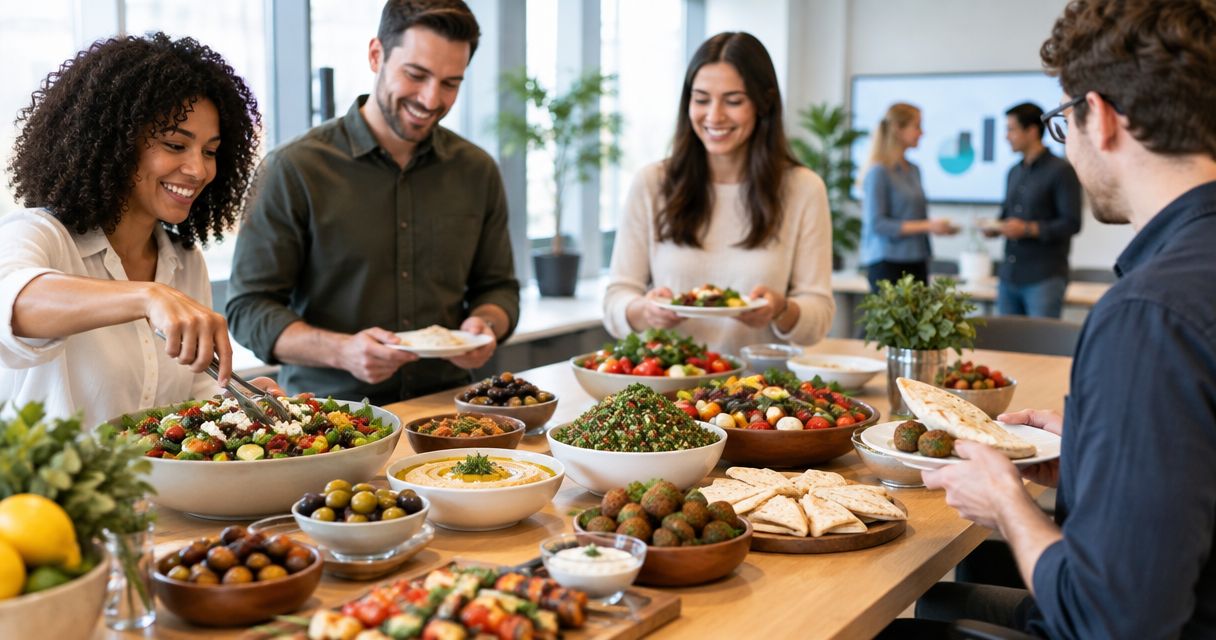
Best overall: build-your-own grain bowls. Best for shared lunches: Mediterranean-style platters. Best for meeting schedules: boxed whole-grain wraps. This 2026 guide compares the best healthy lunch catering for offices by meal balance, dietary flexibility, serving format, and cleanup.
- The best healthy lunch catering for offices starts with grain bowls: vegetables, protein, and grains stay easy to customize.
- Choose Mediterranean-style platters for shared lunches and boxed whole-grain wraps for meetings with fixed start times.
- LoveCater connects offices with local restaurants for corporate catering, group orders, and real-time delivery tracking.
- Check ingredients and preparation with the restaurant; vegetarian, gluten-free, and allergy-safe are different requirements.
Why this matters
A healthy office lunch needs to work as a meal, not just look healthy on a menu. A bowl of leaves without a substantial topping serves a different purpose from a salad with beans, chicken, tofu, or another protein source.
The ordering format matters, too. Shared trays let colleagues adjust their portions, while individual meals make distribution simpler during a meeting. Neither format automatically produces a more balanced lunch.
LoveCater is best for offices coordinating healthy lunch catering from local restaurants through online ordering, group orders, and real-time delivery tracking. Use LoveCater to explore restaurant options, then check the actual dishes and preparation details before choosing a menu.
What makes the best healthy office lunch catering?
Use these criteria for your 2026 shortlist. Evaluate the meal itself before comparing how it arrives.
- Meal balance: Look for vegetables, a protein source, and a substantial base or side, such as whole grains or beans.
- Ingredient transparency: Request ingredients for mains, dressings, sauces, and garnishes. A dish name does not explain everything it contains.
- Dietary flexibility: Choose a format that accommodates different preferences without leaving someone with only side dishes.
- Serving practicality: Match shared trays, individual containers, and utensils to your room and meeting schedule.
- Portion control: Favor adjustable portions or clearly described individual meals rather than guessing from tray photographs.
- Food handling: Confirm where food will wait, how it will stay at a safe temperature, and who will receive it.
Healthy does not mean universally suitable. A grain bowl can contain an allergen, a vegetarian dish can contain dairy, and a gluten-free ingredient does not establish gluten-free preparation.
Healthy office lunch options at a glance
These 2026 recommendations rank meal formats, not individual restaurants. The limitation column is as important as the recommendation: it shows where each option stops being the right fit.
| Rank and option | Best for | Standout feature | Key limitation |
|---|---|---|---|
| 1. Build-your-own grain bowls | Mixed dietary preferences | Separately served components let people assemble their meals | Requires serving space and careful utensil separation |
| 2. Mediterranean-style platters | Shared team lunches | Vegetables, dips, grains, and proteins work as separate components | Common components contain sesame, wheat, or dairy |
| 3. Composed entrée salads | Vegetable-forward seated lunches | A complete meal can arrive in an individual container | Light toppings can leave the meal without enough substance |
| 4. Boxed whole-grain wraps | Meetings with fixed start times | Individual meals are straightforward to distribute | Fillings are difficult to change after assembly |
| 5. Plant-based hot plates | Vegetarian-centered menus | Beans, lentils, or tofu can anchor the main course | Hot food needs temperature control and suitable serving equipment |
1. Build-your-own grain bowls: best for mixed dietary preferences
Build-your-own grain bowls separate the base, vegetables, proteins, and toppings so each person can assemble a meal. Start with a whole-grain option, offer vegetables, and include a plant-based protein alongside any meat or fish selection.
This format earns the default recommendation because the components remain adjustable. Someone who avoids a particular sauce can leave it off without needing an entirely different main dish.
Grain bowl pros
- Separate components make personal preferences easier to accommodate.
- Vegetables and protein can be added independently of the grain portion.
- Dressings served separately let each person control how much they use.
- Plant-based proteins can function as a main component rather than an afterthought.
Grain bowl cons
- A serving line needs table space and room for people to move.
- Shared utensils create a cross-contact concern for food allergies.
- Ordering components separately requires attention to quantities across the whole meal.
Best for: Offices with varied preferences and space for a self-serve lunch.
Ask the restaurant to identify every component, including garnishes. Keep a dedicated utensil with each dish, and arrange separately prepared allergy-specific meals directly with the restaurant rather than relying on the shared line.
Verdict — Buy: Choose build-your-own grain bowls as the default when flexibility matters more than immediate distribution.
2. Mediterranean-style platters: best for shared team lunches
Mediterranean-style platters combine dishes such as chopped vegetables, hummus, grain salads, breads, and separate proteins. The useful feature is the component-based serving format, not the regional label alone.
You can build a vegetable-forward spread without requiring everyone to choose the same main. Check each dish individually: the menu category does not establish its ingredients or nutritional profile.
Mediterranean platter pros
- Separate dishes allow people to build different combinations.
- Beans and chickpea-based dishes can contribute plant-based protein.
- Shared platters suit a lunch where colleagues serve themselves and sit together.
Mediterranean platter cons
- Tahini contains sesame, while breads and some grain salads contain wheat.
- Yogurt-based dips contain dairy, and shared serving introduces cross-contact concerns.
- A spread dominated by bread and dips needs more substantial main-dish planning.
Best for: Team lunches with time to serve, sit, and eat together.
Ask which dishes provide the main protein and which are accompaniments. Keep sauces and dressings identifiable, and request a separate meal when shared platters cannot meet someone's dietary requirements.
Verdict — Buy: Choose Mediterranean-style platters for a shared lunch, provided the menu includes substantial mains and clear ingredient information.
3. Composed entrée salads: best for vegetable-forward seated lunches
An entrée salad is a main meal built around vegetables with a substantial protein topping and, where appropriate, grains, beans, or another filling accompaniment. It is different from a small side salad added to a catering package.
Individual salads work well when you want a vegetable-forward lunch without setting up a serving line. Specify the complete combination rather than ordering by a healthy-sounding name.
Entrée salad pros
- Individual containers simplify meal distribution.
- Vegetables form the foundation rather than a small side.
- Separately packed dressing keeps people in control of the final preparation.
Entrée salad cons
- Leaves and a small garnish do not substitute for a substantial main meal.
- Nuts, cheese, croutons, and dressings introduce ingredients that need checking.
- Dressed salads lose texture while waiting to be eaten.
Best for: Seated office lunches where people want vegetables as the main part of the meal.
Request a clear description of the protein and accompanying ingredients. Offer an alternative for colleagues who do not want a cold main, and keep dressing separate until lunch begins.
Verdict — Buy: Choose composed entrée salads when the toppings make them complete meals; skip side salads presented as mains.
4. Boxed whole-grain wraps: best for meetings with fixed start times
Boxed wraps package the main meal individually, making it straightforward to hand out lunch before a presentation or working session. Choose a whole-grain wrap with vegetables and a substantial filling, then assess the accompanying sides separately.
The box is an organizational choice, not a nutritional guarantee. A wrap's ingredients and portion matter more than the fact that it arrives neatly packed.
Boxed wrap pros
- Individual meals avoid the need for a shared serving line.
- Clearly identified boxes help colleagues find their selected meal.
- The main and sides travel together, simplifying distribution.
Boxed wrap cons
- Assembled fillings are difficult to remove or substitute.
- Whole-grain wraps containing wheat are not suitable for a gluten-free requirement.
- Individually packed meals create packaging that someone must collect afterward.
Best for: Meetings where lunch needs to be distributed before everyone sits down.
Request clear identification of each variation and keep dietary-specific meals separate during handout. For a closer look at this format, see the guide to boxed lunch catering for business meetings.
Verdict — Buy: Choose boxed whole-grain wraps when meeting timing matters more than last-minute customization.
5. Plant-based hot plates: best for vegetarian-centered menus
Plant-based hot plates put dishes built around beans, lentils, tofu, vegetables, and grains at the center of lunch. Examples include a lentil-based stew with a grain side or tofu with vegetables and rice; these are menu ideas, not confirmed restaurant offerings.
Make the protein source explicit. A vegetable side dish does not become a substantial vegetarian main simply because the meat has been removed.
Plant-based hot plate pros
- Plant proteins can serve as the main dish for the whole menu.
- Hot dishes provide an alternative to salads and sandwiches.
- Separately served grains and vegetables allow some portion adjustment.
Plant-based hot plate cons
- Hot meals need appropriate holding arrangements before service.
- Plant-based dishes can contain soy, wheat, nuts, or other allergens.
- Sauces and cooking methods still require review; plant-based does not automatically mean balanced.
Best for: Offices planning a vegetarian-centered lunch rather than a meat-based menu with a separate substitute.
Confirm whether dishes contain dairy, eggs, or animal-based stock when those ingredients matter to your group. Arrange suitable serving equipment before choosing shared hot trays.
Verdict — Buy: Choose plant-based hot plates when vegetarian mains are the priority and your office can handle hot food safely.
How to turn the shortlist into an order
For your 2026 office lunch plan, settle the serving format before choosing individual dishes. A good menu still creates work if it arrives in a format your room cannot support.
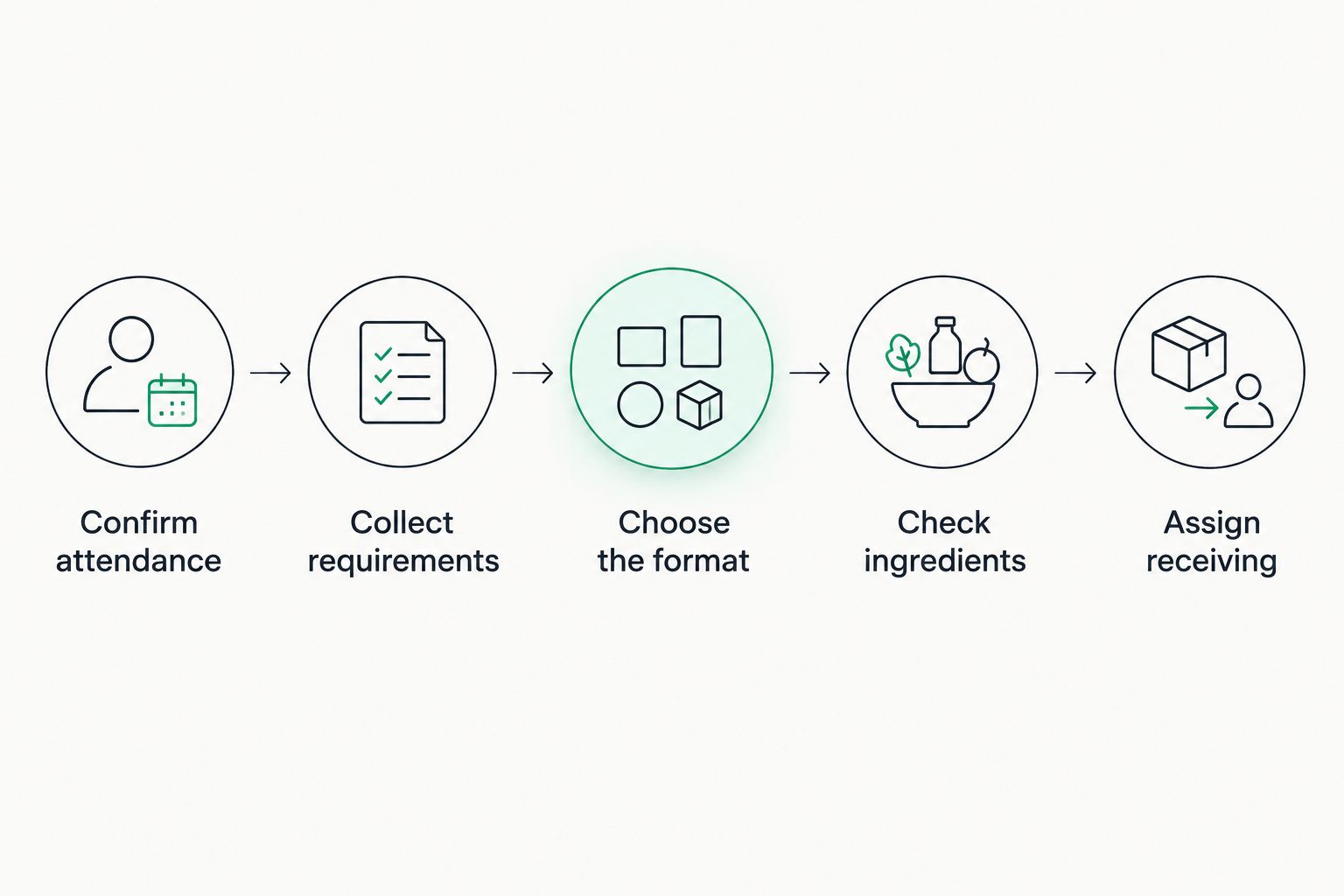
- Confirm attendance: Use the people eating that day, not the full employee roster.
- Collect requirements: Separate preferences from allergies and other medically necessary restrictions.
- Choose the format: Match self-service or individual meals to the space and schedule.
- Check ingredients: Include sauces, garnishes, sides, and preparation questions.
- Assign receiving: Name the person who will accept delivery and organize lunch.
LoveCater supports corporate catering, group orders, and real-time delivery tracking. Use those ordering features alongside direct ingredient and preparation checks with the restaurant; tracking a delivery does not establish that a dish meets a dietary requirement.
Plan your office lunch
Explore local restaurants for corporate catering and group orders.
How the options are ranked
This 2026 ranking prioritizes meal balance, ingredient transparency, dietary flexibility, serving practicality, portion control, and food handling. It evaluates menu formats rather than claiming a restaurant tasting or nutritional analysis.
Build-your-own grain bowls take the default position because their components remain adjustable. Boxed wraps win a different job: distributing individual lunches around a fixed meeting schedule. Choose the format that solves your office's actual constraint.
Which healthy office lunch should you choose?
Choose build-your-own grain bowls when you are undecided. They let your team combine vegetables, protein, and grains without committing everyone to the same assembled meal.
Choose Mediterranean-style platters for a shared lunch, composed entrée salads for a vegetable-forward meal, boxed wraps for scheduled meetings, and plant-based hot plates for vegetarian-centered menus. Confirm the restaurant's actual ingredients before treating any option as suitable for everyone.
FAQ
What's the best healthy lunch catering for offices in 2026?
Build-your-own grain bowls are the best default for offices with varied preferences. Separate vegetables, grains, proteins, and dressings let colleagues assemble different meals from the same menu.
Are salads healthier than wraps for an office lunch?
A salad is not automatically healthier than a wrap. Compare the complete meal, including vegetables, protein, grains, dressing, and sides, rather than choosing by format alone.
What should I order for vegetarian employees?
Order a substantial vegetarian main built around ingredients such as beans, lentils, or tofu. Confirm dairy, egg, stock, and preparation details when your colleagues require a vegan meal.
Can shared catering accommodate food allergies?
Shared catering requires direct discussion with the restaurant about ingredients and cross-contact. Separate utensils alone do not establish that a meal is safe for someone with a food allergy.
Are boxed lunches better for business meetings?
Boxed lunches are the better format when you need to distribute individual meals before a meeting starts. They offer less flexibility after assembly, so collect dietary requirements before ordering.
How does LoveCater help with healthy office lunch catering?
LoveCater connects offices with local restaurants through online catering ordering, group orders, and real-time delivery tracking. Choose dishes by their ingredients and preparation rather than assuming every menu option meets the same nutritional needs.
How long can catered lunch sit out?
USDA food-safety guidance limits perishable food at room temperature to 2 hours, or 1 hour when the temperature exceeds 90°F. Keep cold food at 40°F or below and hot food at 140°F or above when holding it for service.
One last thing
Plan the receiving table before you place the order. USDA guidance uses a 2-hour limit for perishable food at room temperature, reduced to 1 hour above 90°F; cold holding should stay at 40°F or below and hot holding at 140°F or above.
A delivery arriving before lunch still needs somewhere appropriate to wait. Assign a recipient, clear the space, and arrange refrigeration or hot holding instead of leaving that decision until the food arrives.