
Best overall: individual boxed breakfasts. Best for a substantial meal: breakfast sandwich trays. Best for a simple spread: continental breakfast. This guide compares the best breakfast catering for meetings by serving format; LoveCater connects businesses and groups with local restaurants for catering, group orders, and real-time delivery tracking.
- Individual boxed breakfasts are the best breakfast catering for meetings when attendees need an easy, seated meal.
- Breakfast sandwich trays suit substantial morning meals; continental spreads suit light refreshments.
- Hot breakfast buffets need serving space; yogurt stations need chilled storage and separate toppings.
- LoveCater is best for businesses seeking local restaurant catering, group orders, and real-time delivery tracking.
Why this matters
Breakfast catering has to work around the meeting, not interrupt it. A meal that needs cutting, assembly, or a serving line asks more of your room and schedule than something attendees can pick up and eat seated.
For your 2026 morning meetings, choose the serving format before choosing dishes. A training session with a planned breakfast break has different needs from a presentation that begins as soon as everyone arrives. Start with how people will eat, then decide what they will eat.
What makes the best breakfast catering for meetings
Use these criteria to choose a breakfast format in 2026:
- Meeting fit: Can attendees eat during the session, or does the agenda include a separate meal break?
- Serving effort: Does breakfast arrive ready to hand out, or do you need utensils, serving equipment, and someone managing the table?
- Dietary clarity: Can you identify ingredients and keep requested alternatives separate without guessing?
- Meal size: Are you offering refreshments or replacing breakfast? Choose the order around that expectation.
- Room fit: Is there space for a serving line, drinks, used packaging, and attendees moving around?
- Delivery coordination: Who receives the order, checks it, and handles a problem before the meeting starts?
Treat these as decision rules, not a scorecard. A hot buffet does not beat a boxed breakfast because it includes more dishes; it wins only when your meeting has room and time for buffet service.
Breakfast catering options at a glance
| Rank | Breakfast format | Best for | Standout feature | Key limitation |
|---|---|---|---|---|
| 1 | Individual boxed breakfasts | Meetings with seated eating | Separate meals are easy to distribute | Packaging and individual order management |
| 2 | Continental breakfast spread | Light refreshments before a presentation | Attendees choose a small selection | Pastries alone do not provide a substantial meal |
| 3 | Breakfast sandwich trays | Teams wanting a substantial handheld meal | A main item that needs little assembly | Fillings need clear labels and appropriate holding |
| 4 | Hot breakfast buffet | Workshops with a dedicated meal break | Shared service with several components | Requires space, equipment, and serving time |
| 5 | Build-your-own yogurt station | Cold breakfasts with customizable toppings | Attendees assemble their own bowl | Needs chilled storage and ingredient separation |
These are serving formats, not claims about a particular restaurant's menu. Confirm the actual dishes, ingredients, packaging, and delivery arrangements before placing an order.
1. Individual boxed breakfasts: best for seated morning meetings
Individual boxed breakfasts keep each attendee's meal separate. You distribute the boxes, identify any named dietary requests, and let people eat without visiting a shared serving table.
For a 2026 meeting that starts promptly, this is the default choice. Choose a box that is practical at a desk or conference table, and confirm whether cutlery and napkins are included rather than assuming they are.
Individual boxed breakfast pros:
- Separate meals make distribution straightforward.
- Named boxes help route individual selections to the right attendee.
- Attendees do not need to build a plate during the session.
Individual boxed breakfast cons:
- Individual packaging creates material to collect and discard.
- Late attendee changes require checking the order again.
- A box still needs ingredient confirmation; packaging does not establish allergen safety.
Best for: Presentations, interviews, and working breakfasts where people remain seated.
Start your order with 1 main breakfast portion per confirmed attendee. This is a planning choice, not a universal portion standard: adjust the contents for whether you are serving a full meal or a light snack, and confirm the restaurant's portion description.
Verdict: Buy individual boxed breakfasts for seated meetings; skip them when shared service is the point of the event.
2. Continental breakfast: best for light pre-meeting refreshments
A continental breakfast spread centers on ready-to-serve items such as pastries, breads, and fruit. You arrange the food for attendees to select before sitting down, with drinks handled separately.
Choose continental breakfast for a 2026 presentation when the food supports the session rather than becoming a meal event. If attendees expect a substantial breakfast, pastries alone are the wrong brief; ask about additional options rather than treating a larger pastry order as a complete meal.
Continental breakfast pros:
- Ready-to-serve items need little on-site preparation.
- Attendees can choose a small amount without taking a full meal.
- A shared spread suits informal arrivals and conversation.
Continental breakfast cons:
- Bread and pastry selections need ingredient checks for dietary requests.
- Shared service requires utensils and attention to ingredient separation.
- A light spread does not suit every attendee's breakfast expectations.
Best for: Short presentations, networking arrivals, and meetings described as offering light refreshments.
Keep the selection deliberate. More varieties mean more ingredients to check, more labels to prepare, and more serving decisions. Tell attendees whether breakfast is a meal or refreshments so they can plan accordingly.
Verdict: Buy continental breakfast for light refreshments; skip a pastry-only spread when you have promised a full breakfast.
3. Breakfast sandwich trays: best for a substantial handheld meal
Breakfast sandwich trays provide a main item that attendees can take without assembling a plate of separate dishes. Examples include sandwiches with egg, cheese, vegetables, or meat; the actual choices depend on the restaurant you select.
This format suits teams that want something substantial without buffet service. Confirm whether sandwiches arrive wrapped individually or together on trays, because that changes both distribution and labeling.
Breakfast sandwich tray pros:
- A handheld main item needs little assembly.
- Separate tray labels can distinguish confirmed filling choices.
- Sandwiches work for a meal break without a full buffet layout.
Breakfast sandwich tray cons:
- Bread, fillings, and sauces require individual ingredient checks.
- Hot sandwiches need appropriate transport and holding arrangements.
- Similar-looking sandwiches are difficult to distinguish without labels.
Best for: Team check-ins and working sessions with a brief breakfast break.
Ask how the restaurant identifies each selection. A vegetarian filling does not establish that a sandwich meets other dietary requirements, and removing one ingredient does not establish how the meal was prepared. Get a direct answer about the requested meal.
Put confirmed alternatives aside for their intended recipients rather than leaving them mixed into the main tray. That is an order-management step, not an allergen-control guarantee.
Verdict: Buy breakfast sandwich trays for a substantial handheld meal; hold the order until fillings and labels are clear.
4. Hot breakfast buffet: best for workshops with a meal break
A hot breakfast buffet offers shared dishes that attendees serve onto plates. Eggs, potatoes, and other breakfast components are examples of possible dishes, not a menu promise from any platform or restaurant.
For a 2026 workshop, choose this format when breakfast has its own place in the agenda. The room must support serving, eating, and clearing up without taking over the session.
Hot breakfast buffet pros:
- Attendees choose which components to put on their plates.
- Shared dishes allow different combinations within the confirmed menu.
- A dedicated meal break gives the group time to eat together.
Hot breakfast buffet cons:
- Service needs suitable holding equipment and utensils.
- A serving line interrupts a session if breakfast has no separate break.
- Shared utensils require attention to ingredient separation.
Best for: Training days, team workshops, and longer sessions with a scheduled breakfast period.
Ask who supplies, sets up, and removes the equipment. Confirm the service arrangement before choosing dishes: food delivery and staffed buffet service are different requirements.
If the room permits, use 2 separate service points: one for food and one for drinks. This is a layout recommendation to keep drink preparation out of the food queue, not a claim about measured waiting times.
Verdict: Buy a hot breakfast buffet for a dedicated meal break; skip it for a meeting with no serving space.
5. Build-your-own yogurt station: best for customizable cold breakfasts
A yogurt station lets attendees combine a base with separately served toppings, such as fruit or granola. Keep the components identifiable so people can decide what to add.
This format suits an informal breakfast where attendees have time to assemble a bowl. It is not a shortcut around dietary checks: bases and toppings each need their own ingredient information.
Build-your-own yogurt station pros:
- Attendees choose their own topping combinations.
- Separate components make the selection visible.
- Cold service avoids the need for hot-food holding equipment.
Build-your-own yogurt station cons:
- Perishable ingredients need appropriate chilled storage.
- Shared toppings and utensils need careful separation.
- Assembly requires counter space and creates a serving stop.
Best for: Informal team breakfasts with space for cold service and time for assembly.
Keep each topping with its own utensil. Ask about alternatives when an attendee requests them, but do not assume a plant-based base or a particular topping is offered. Confirm its ingredients and preparation directly.
If breakfast must be eaten during a presentation, an individually portioned cold meal is a better fit than an assembly station.
Verdict: Buy a yogurt station for customizable cold breakfasts; skip it when chilled storage or assembly space is missing.
How we ranked these breakfast formats
The ranking prioritizes meeting fit, serving effort, dietary clarity, meal size, room fit, and delivery coordination. Individual boxed breakfasts take the default position because separate meals suit seated meetings; the other formats win when your agenda supports their serving requirements.
This is a format-based guide, not a restaurant taste test or a ranking of delivery performance. LoveCater is best for businesses seeking local restaurant breakfast catering, group orders, and real-time delivery tracking. Those features support order coordination; you still need to confirm the selected restaurant's menu and service details.
Turn your choice into a clear catering order
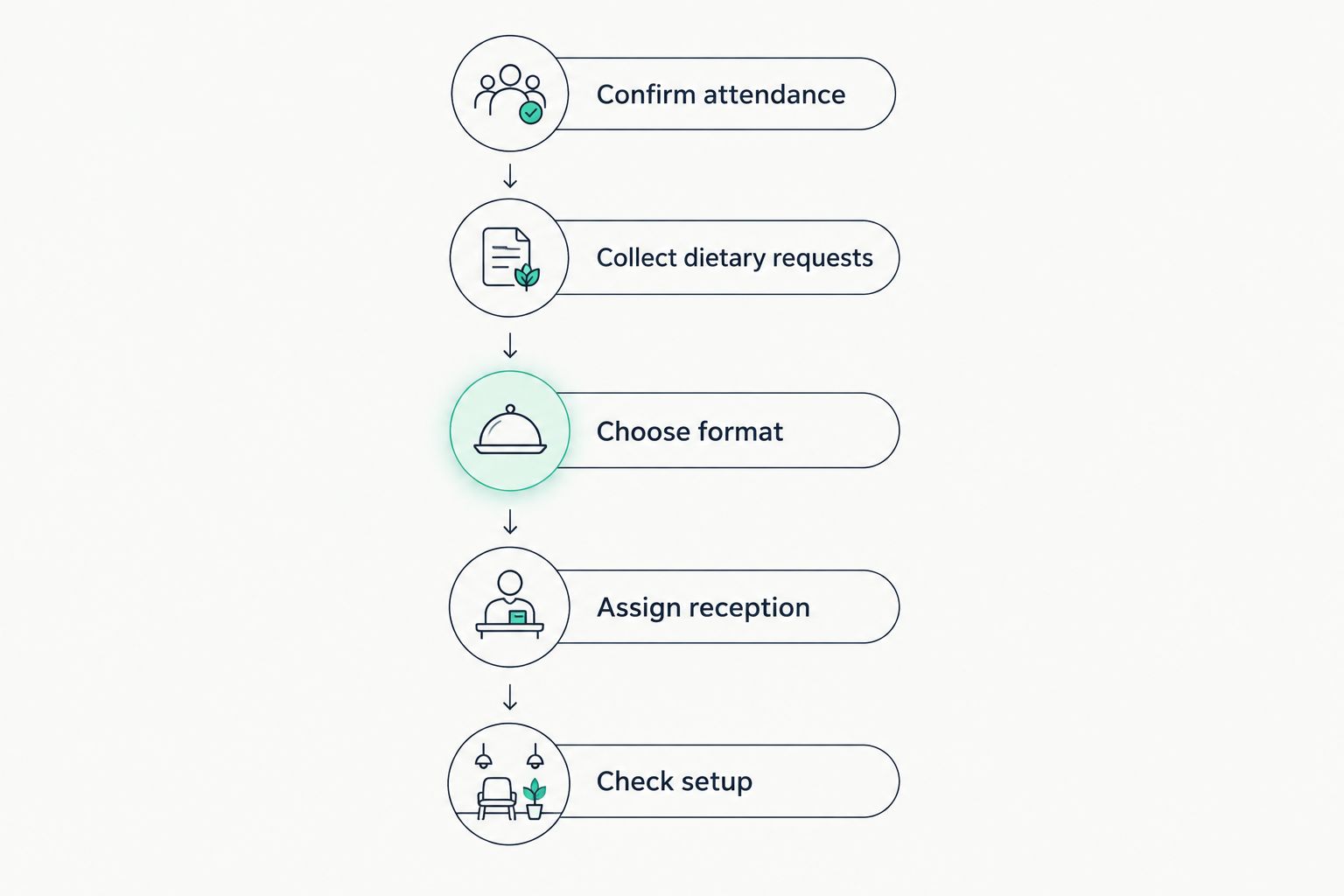
Use this sequence to keep the order aligned with the meeting:
- Confirm attendance: Establish who will eat, including guests and organizers.
- Collect dietary requests: Ask attendees directly and confirm requested meals with the restaurant.
- Choose format: Match the breakfast to seated eating, shared service, or a separate meal break.
- Assign reception: Name the person who will receive and check the delivery.
- Check setup: Confirm the serving location, utensils, labels, and cleanup arrangements.
The receiving person needs the order details and access instructions. Real-time tracking helps with delivery coordination, but it does not replace someone taking responsibility at the destination.
As a planning target, schedule the receiving person to be ready 15 minutes before the expected delivery. This is an organizer's buffer, not a promised delivery window. Follow the restaurant's instructions for receiving, holding, and serving the food.
LoveCater breakfast catering connects your business with local restaurants. Use its group-order and tracking features alongside a clear headcount, confirmed dietary requests, and a named delivery contact.
Plan your meeting breakfast
Explore local restaurant catering, group orders, and real-time delivery tracking.
Which breakfast catering should you choose?
Choose individual boxed breakfasts if you are undecided. They fit a seated morning meeting without requiring attendees to assemble breakfast or visit a buffet during the session.
Choose continental breakfast for light refreshments, sandwich trays for a substantial handheld meal, a hot buffet for a dedicated break, or a yogurt station for customizable cold service. For your 2026 meeting plan, the deciding question is simple: does the food fit the agenda and the room?
FAQ
What's the best breakfast catering for meetings?
Individual boxed breakfasts are the best default for seated morning meetings. Separate meals are straightforward to distribute, but you still need to confirm ingredients, portions, and packaging.
Is a breakfast buffet better than boxed breakfasts?
A breakfast buffet is better for a meeting with a dedicated meal break and enough serving space. Boxed breakfasts are the better fit when attendees need to eat seated during the session.
What should I order for a short morning meeting?
Choose continental breakfast when you are offering light refreshments rather than a full meal. Tell attendees what to expect, and confirm dietary requests before ordering.
How much breakfast should I order per person?
Start with one main breakfast portion per confirmed attendee, then check the restaurant's portion description against your meal plan. Shared spreads need a separate discussion about what each ordered tray serves.
How do I handle dietary requirements for meeting breakfast?
Collect dietary requests directly from attendees and confirm ingredients and preparation with the restaurant. Labels and separate packaging help identify meals, but they do not establish allergen safety.
Can LoveCater help organize breakfast catering?
LoveCater connects businesses and groups with local restaurants for catering and offers group orders and real-time delivery tracking. Confirm the breakfast menu and service arrangements for the restaurant you choose.
Should coffee be part of the breakfast catering order?
Include coffee in your plan, but confirm whether the restaurant provides drinks and the supplies needed to serve them. If drinks are handled separately, assign someone to prepare that station before attendees arrive.
One last thing
The best menu still needs a person at the door. Assign one receiving contact and one backup, give both the order details, and make sure they know where the food belongs. For a 2026 morning meeting, that is a more useful final check than adding another breakfast variety.